The Wolf’s House

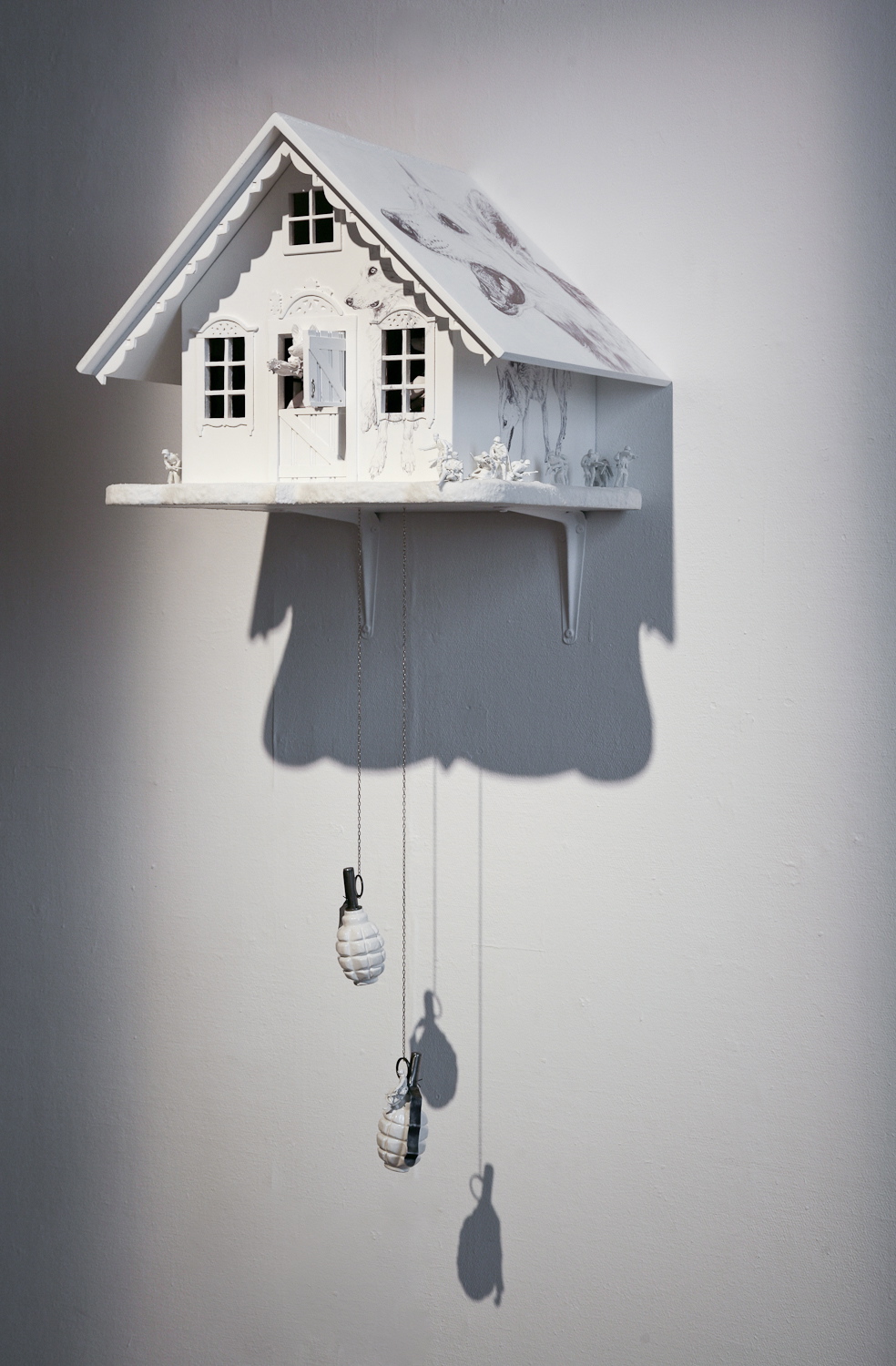
"The Wolf's House", 2012, black Biro drawings and mixed media by Jane Lee McCracken

“The Wolf’s House”, 2012, black Biro drawings and mixed media by Jane Lee McCracken

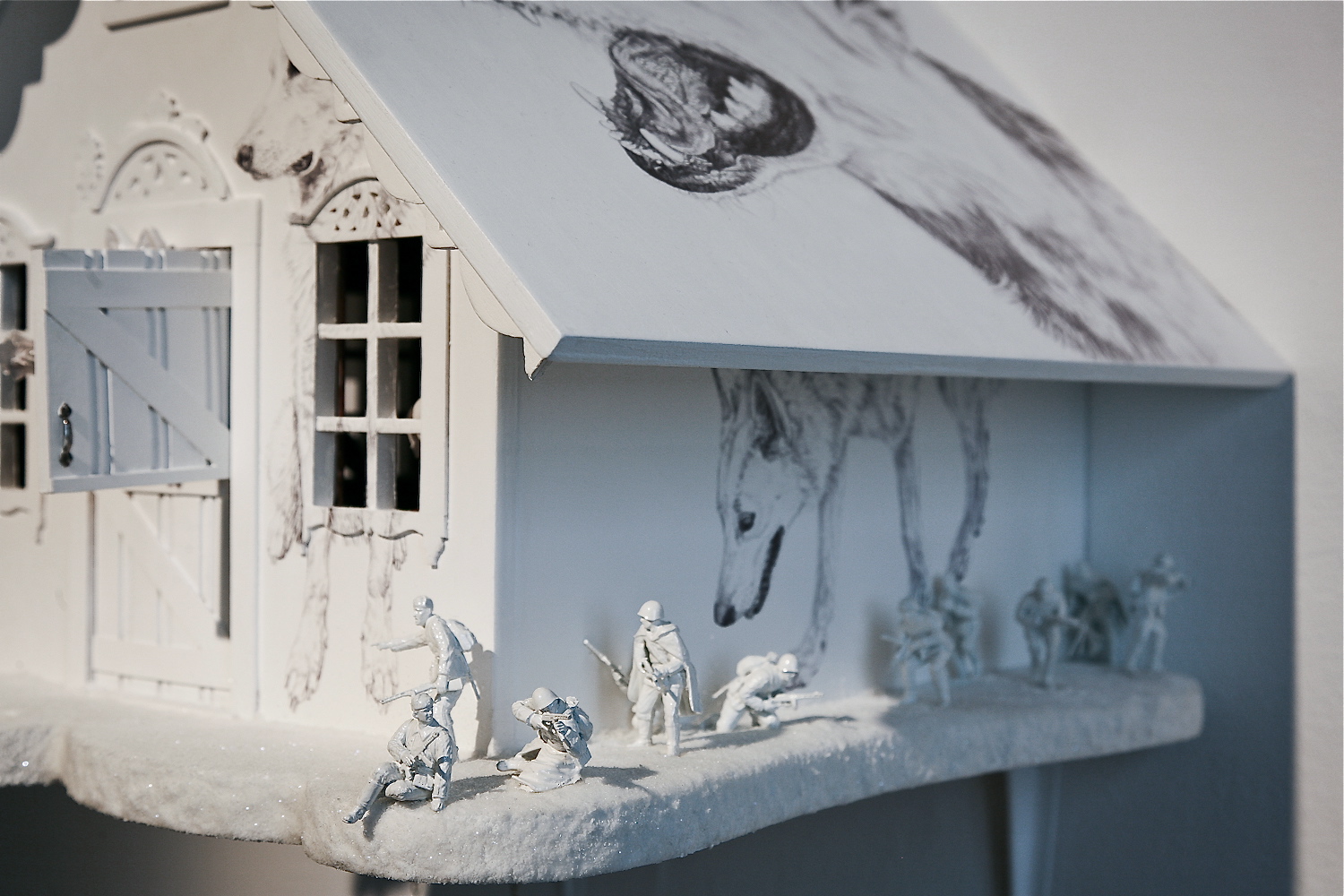
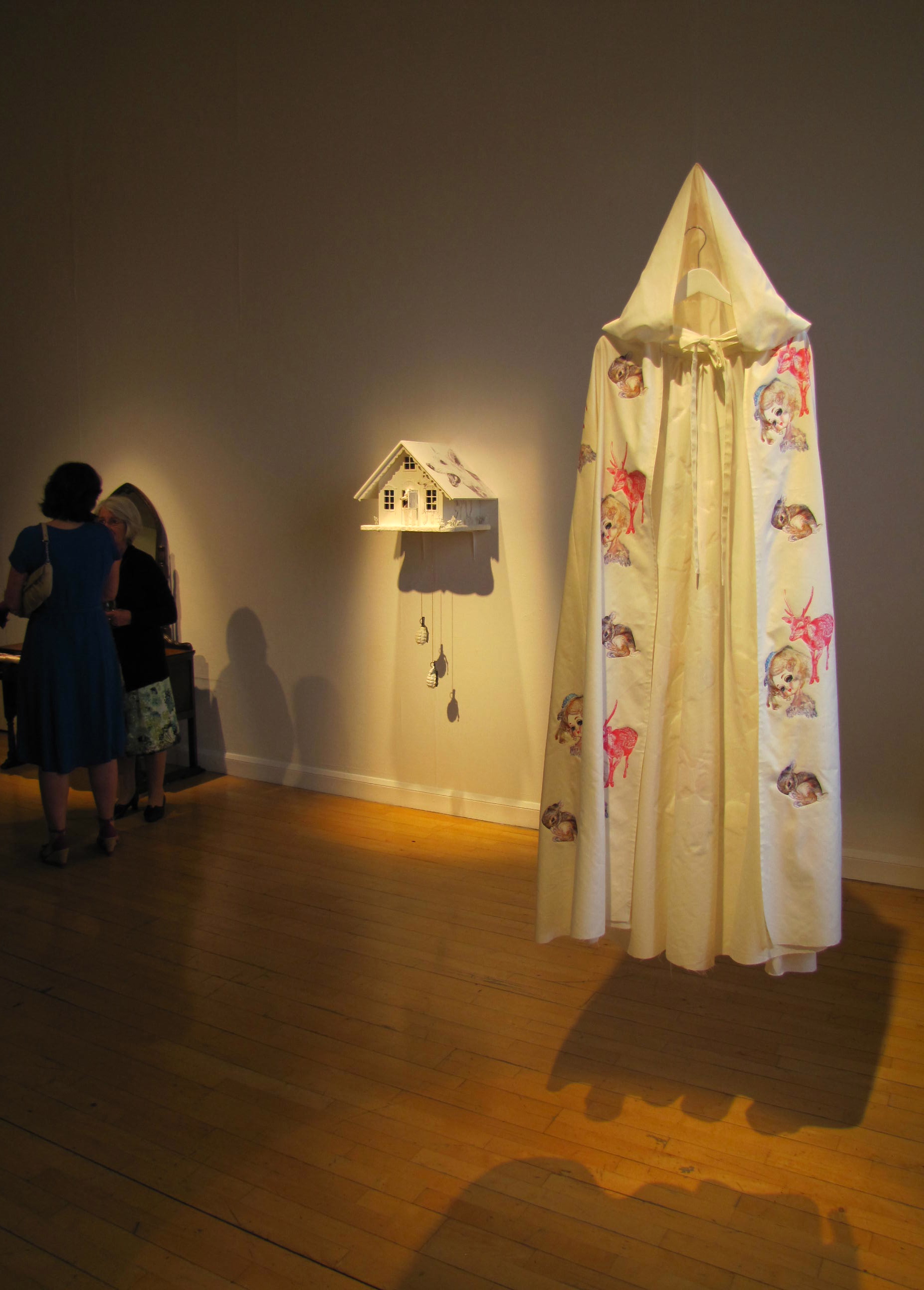
Outside a white-out blizzard howls, while war is waged through it.  Mrs Wolf throws open the door of ‘The Wolf’s House’ and looks out at the soldiers fighting around her cottage.

‘The Wolf’s House’ is symbolically one of the simplest pieces I have created for it simply asks “who is more civilised, man or animals?”.  A take on the iconic cuckoo clock, it was inspired by a cuckoo clock my father brought back to Scotland for me after a trip to Switzerland, when I was a child.

Black Biro drawing of Lily and 'Mrs Wolf'.  'Mrs Wolf' is made from a cast taken of wolf's head from my wedding cake-topper and the body of a vintage Polish Capeila doll as is 'Mr Wolf' who sits by the window.

Black Biro drawing of Lily and ‘Mrs Wolf’. ‘

The piece explores the juxtaposition of the roles of man and animals suggesting the idea of the ‘innocent’ instinctive nature of animals as opposed to the cerebrally determined brutal nature of man.  ‘The Wolf’s House’ is a beacon of light representing civilised society whilst chaos reigns outside; but it is occupied by wolves not humans.

"The Wolf's House", 2013, 'The Woodcutter's Cottage' exhibition, The Mercer Gallery, Harrogate

“The Wolf’s House”, 2013, ‘The Woodcutter’s Cottage’ exhibition, The Mercer Gallery, Harrogate.

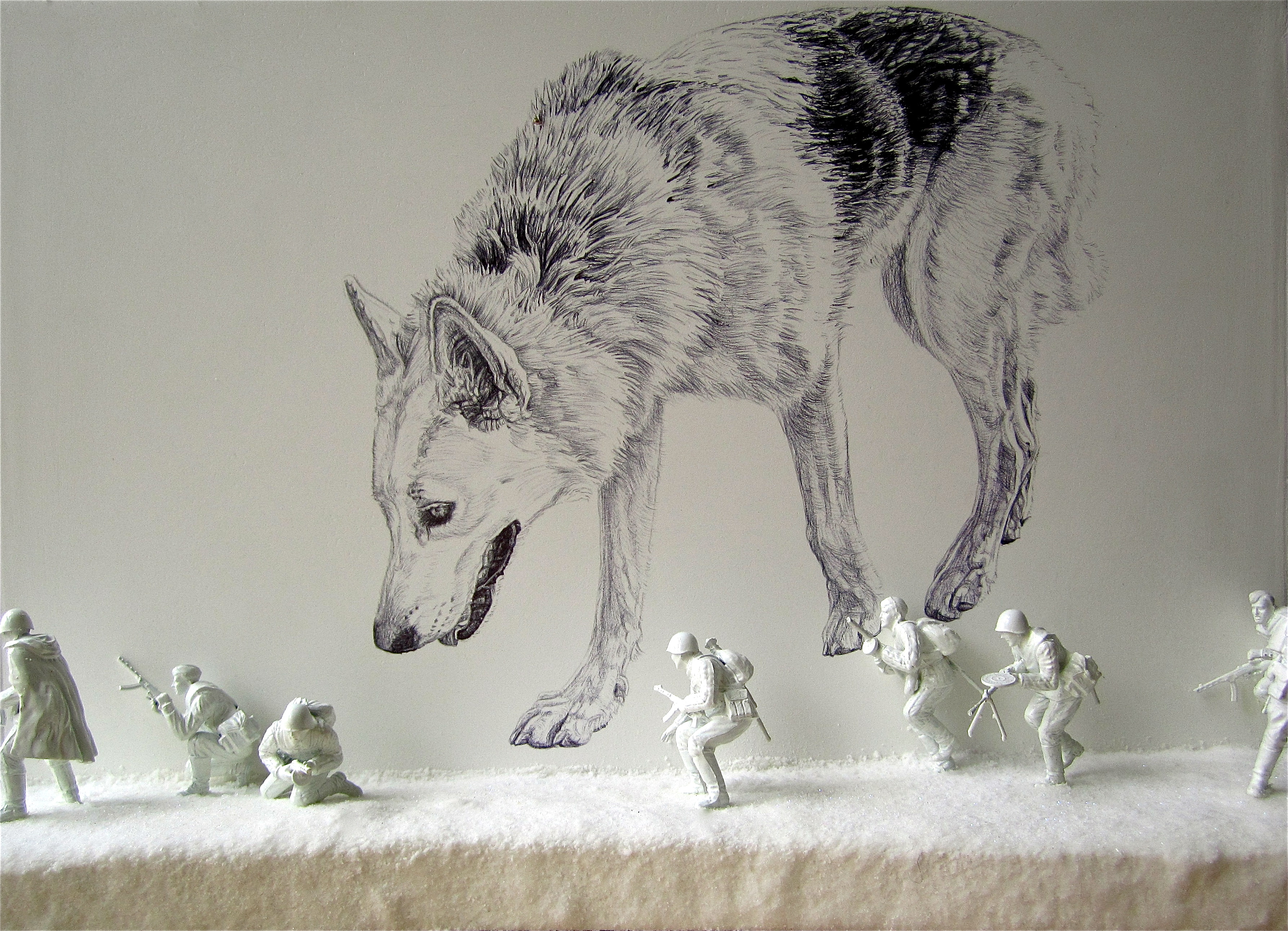
Soldiers fight in the snow around the Wolf’s House whilst Mr and Mrs Wolf witness war, as animals of the forest play peacefully inside the house.  However there is an ever present threat from humans.

'The Wolf's House' roof detail, black Biro drawing of Lily on painted MDF

‘The Wolf’s House’ roof detail, black Biro drawing of Lily on painted MDF

Further inspiration for the piece came from a photograph of Russian soldiers fighting through a village towards Germany after the end of the battle of Stalingrad when the tide of war has changed.  I imagined a cottage somewhere in Eastern Europe encircled by soldiers fighting a brutal war.

Official USSR photograph of Red Army in combat WWII, Artist's own collection.

Official USSR photograph of Red Army in combat WWII, Artist’s own collection.

‘The Wolf’s House is a mixed media piece which includes original black Biro drawings of Lily drawn on painted, sanded MDF.  Model railway snow and glitter were used to create the winter snow scene on the roof and base.  Printed transfers on fabric formed the wallpaper of the interior walls, complete with propaganda posters specifically designed for the piece.  I sourced replica Russian F1 hand grenades which were then painted with white enamel as were the model soldiers, German Assault Infantry in winter gear and Russian Army Assault Infantry.  An authentic cuckoo clock chain bought from a clock shop holds the hand grenade weights of the clock.  ‘Mr and Mrs Wolf’ were made from casts taken of the wolves heads from my wedding cake-topper and the bodies of vintage Polish Capelia dolls bought on Ebay.

'The Wolf's House' interior

‘The Wolf’s House’ interior

Mr Wolf sits by the window surrounded by propaganda posters and watches bears, a wolf, a fox and a tiger cub playing together.

'The Wolf's House' interior shot through window.

‘The Wolf’s House’ interior shot through side window.

'The Wolf's House' interior shot through front window.

‘The Wolf’s House’ interior shot through front window.

Their play indicates that each species has it’s own social structure and behaviour which is rarely disregarded but whilst humans have a highly developed sense of morality, the moral codes by which we live are often breached.

'"Save Us!', Propaganda poster for the Wolf's House, photo montage by Jane Lee McCracken

‘”Save Us!’, 2012, Propaganda poster for the Wolf’s House, photo montage by Jane Lee McCracken

Ultimately the futures of many species’ are held in our hands and this is symbolised by ‘The Wolf’s House’ and the ever present battle around the house and its occupants.

Russian model soldiers fighting in the snow around 'The Wolf's House'

Russian model soldiers fighting in the snow around ‘The Wolf’s House’

Luxury Archival Pigment Prints of ‘Save Us!’ made by the excellent Jack Lowe studio are available to order from my website

'"Save Us!', Propaganda poster for the Wolf's House, photo montage by Jane Lee McCracken

‘”Save Us!’, Propaganda poster for the Wolf’s House, Archival Pigment Print

Take One Puppy, her First Bed and a Proud Nation of Animal Lovers!

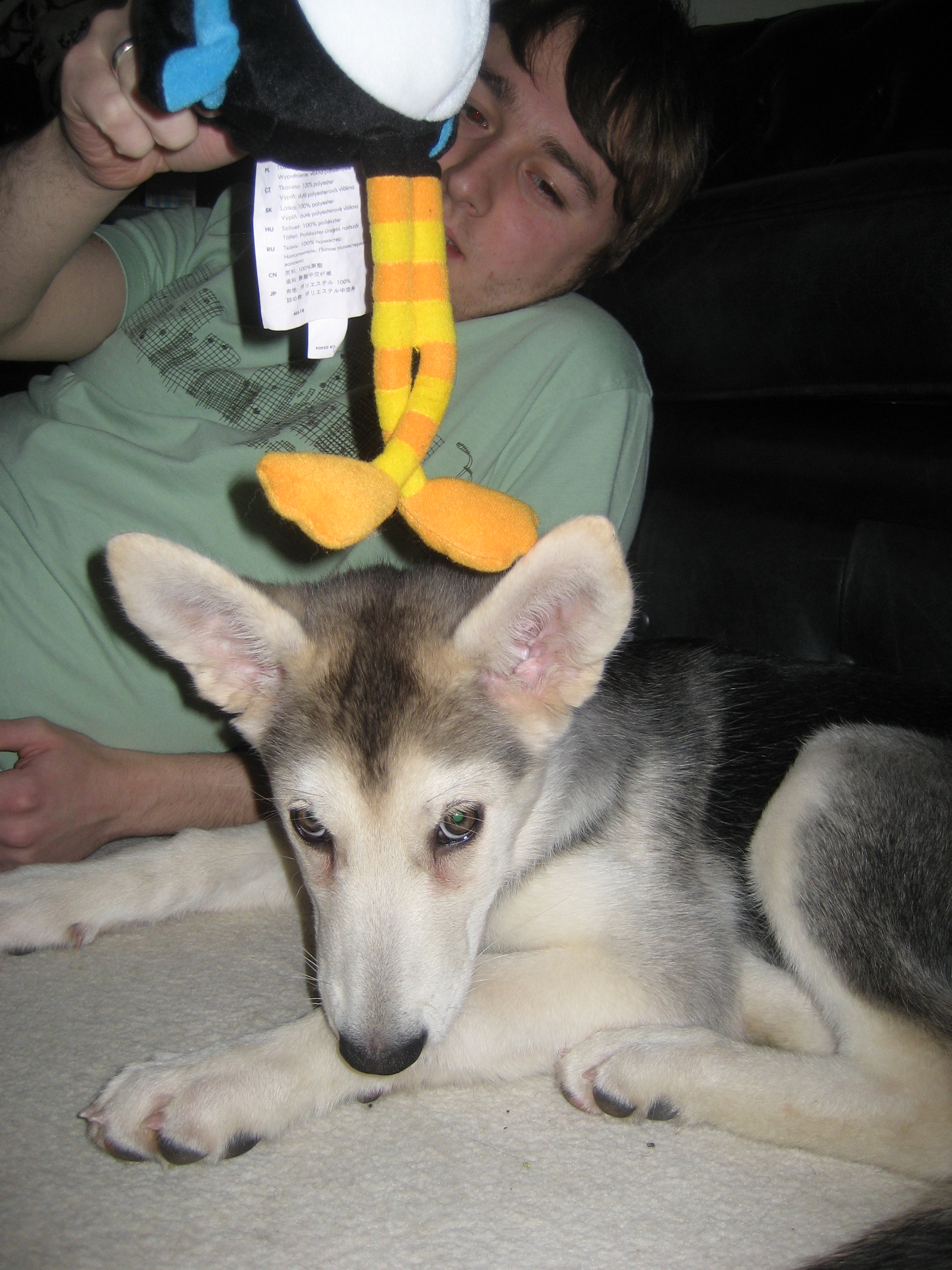
'Lily' aged 15 weeks during the photo shoot for 'The Red Horse and the Wolf Cub'

‘Lily’ aged 15 weeks during the photo shoot for ‘The Red Horse and the Wolf Cub’, 2007

For all those who requested to see the photo-shoot of Lily for the drawing ‘Red Horse and the Wolf Cub’ – here it is in brief!!

Lily on location relaxing during the shoot!

Lily on location relaxing during the shoot!

Lily’s first bed was a red velvet affair with gaudy gold tassels – we called it her ‘Princess Bed’ as it reminded us of the fairy tale ‘The Princess and the Pea’ (for all us children of the 70’s, remember the Ladybird edition of the tale and those fabulous illustrations?).

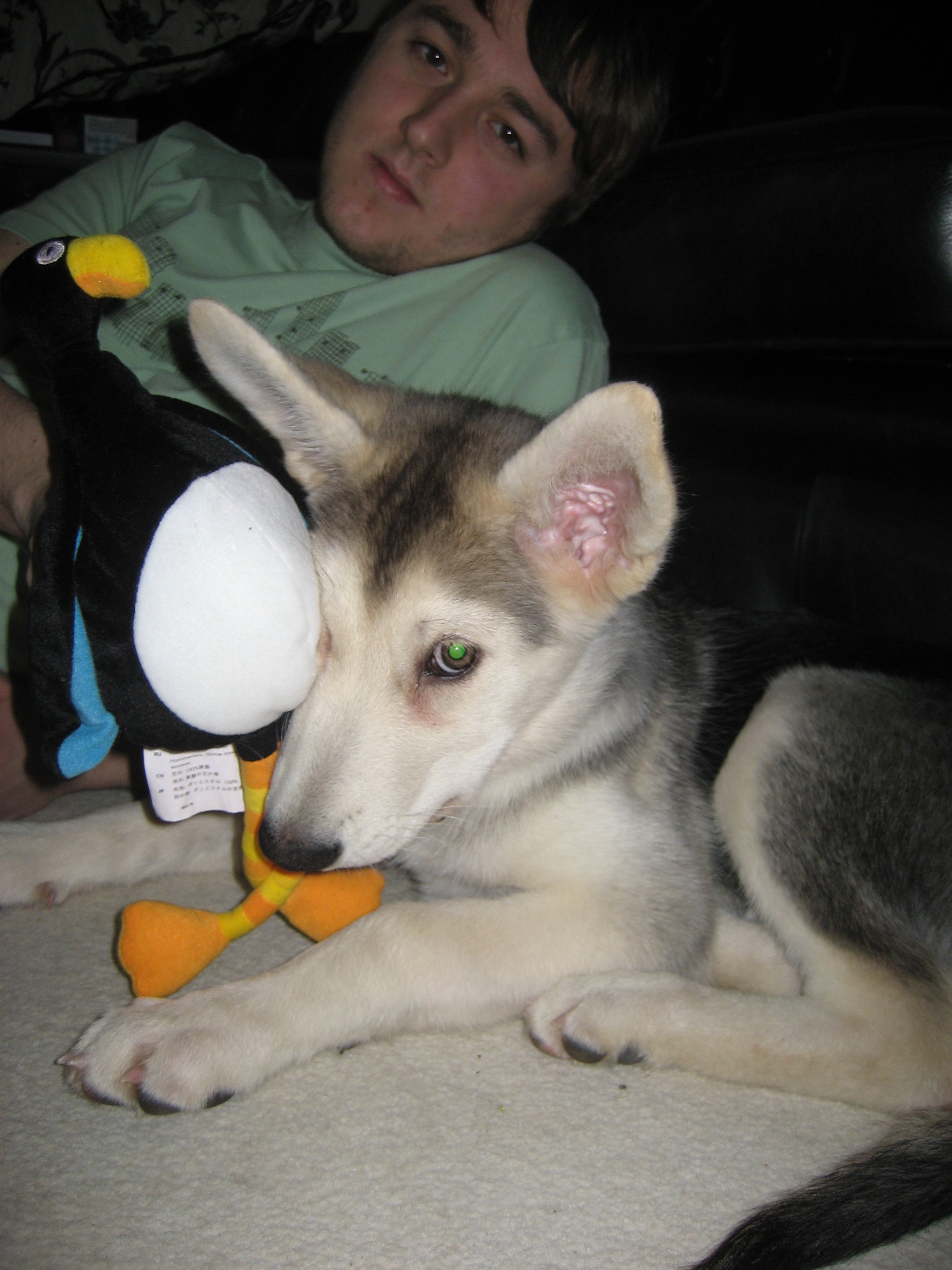
Lily is given Pengy as a gift for her hard work modelling.

Lily is given Pengy as a gift for her hard work modelling.

She loved her wee bed!  Sadly it went the same way as the demise of ‘Pengy’, reduced to a small rag of red velvet!  Pengy was latterly known as ‘Pengy’s Foot’ when Lily realised she had teeth and would use them!  Sid from Toy Story would have been be proud of her.

"I have teeth woo hoo!"

“I have teeth woo hoo!”

"I'm getting bored and sleepy now!"

“I’m getting bored and sleepy now!”

Pengy’s foot resides somewhere in the dark recesses of Lily’s toy box!  Yes Lily has a toy box – for all you cynics out there who can be heard saying ‘typical childless person treating her dog like a baby!’ dogs are intelligent enough to differentiate between their toys and Lily knows each of her many (hence the need for a toy box!) toys by name and can often be found rooting around in her toy box looking for the particular mutilated creature she wants to play with at 5 o’clock sparrow am.  I always see play as an important part of Lily’s daily routine as it keeps her young at heart.  And can she play!

"I'm tired of the camera flash now!"

“Shh, Lily’s asleep!”

On a serious note many people, whether they have children or don’t have children, sadly or contentedly, or are dog or animal lovers, experience a strength of love for their dog that equates to the love of a family member because dogs are intelligent, pack animals with similar character traits to humans and therefore respond positively to love and affection.

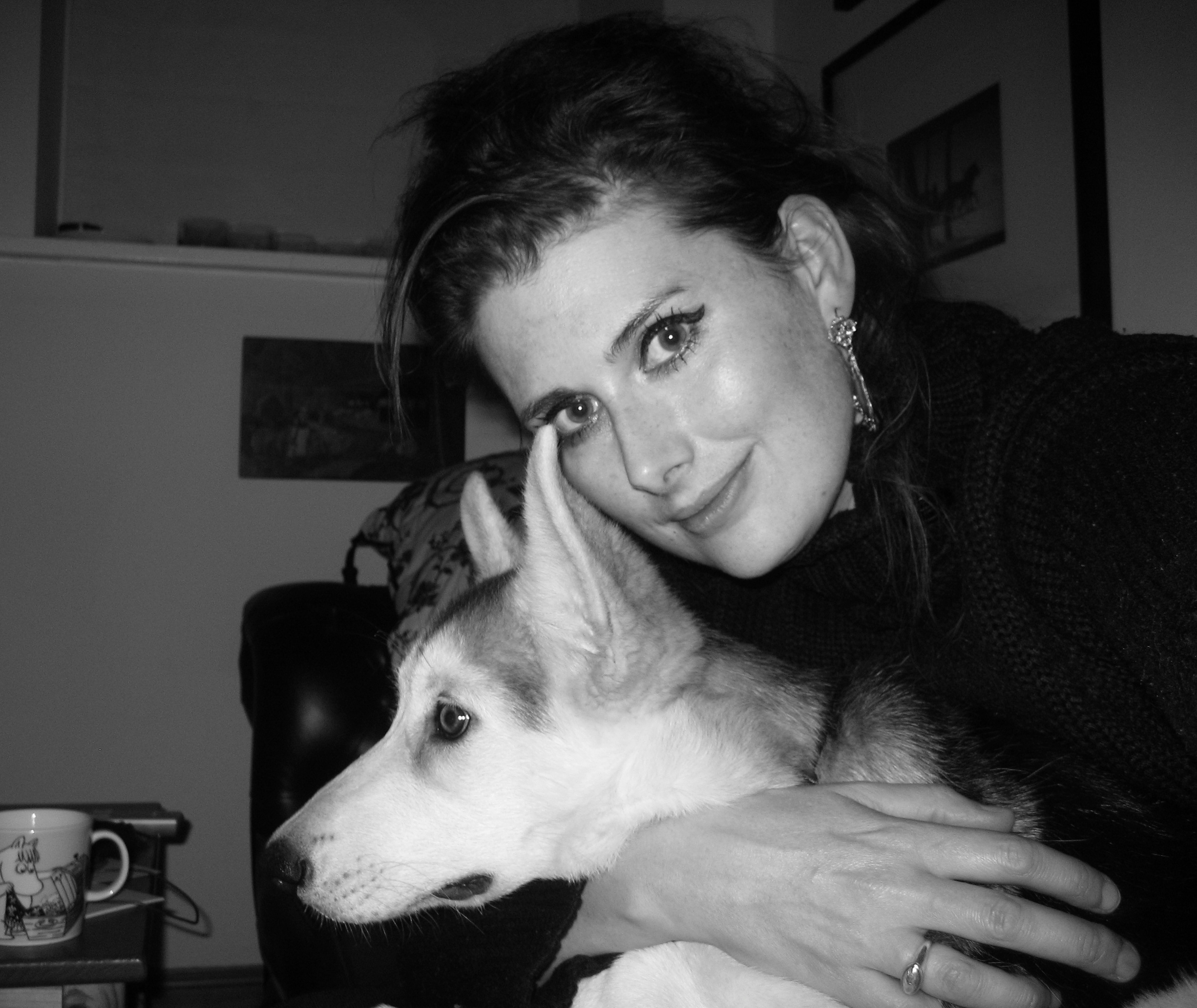
Me and Lily, 2007

Me and Lily, 2007

And what the hell if there are many of us out there who love our dogs like children – they are after all as innocent and reliant upon us, in my opinion as a child is and to give dogs a happy, loving home is surely what they deserve after the legacy we have created through domesticating canines.  Should we not celebrate and promote positively that many of our species share an empathy with and a love for animals? Such empathy defines a nation as a compassionate modern society and a nation of animal lovers is something to be proud of.

Lily and me, 2007

Lily and me, 2007

“The greatness of a nation and its moral progress can be judged by the way its animals are treated   Gandhi

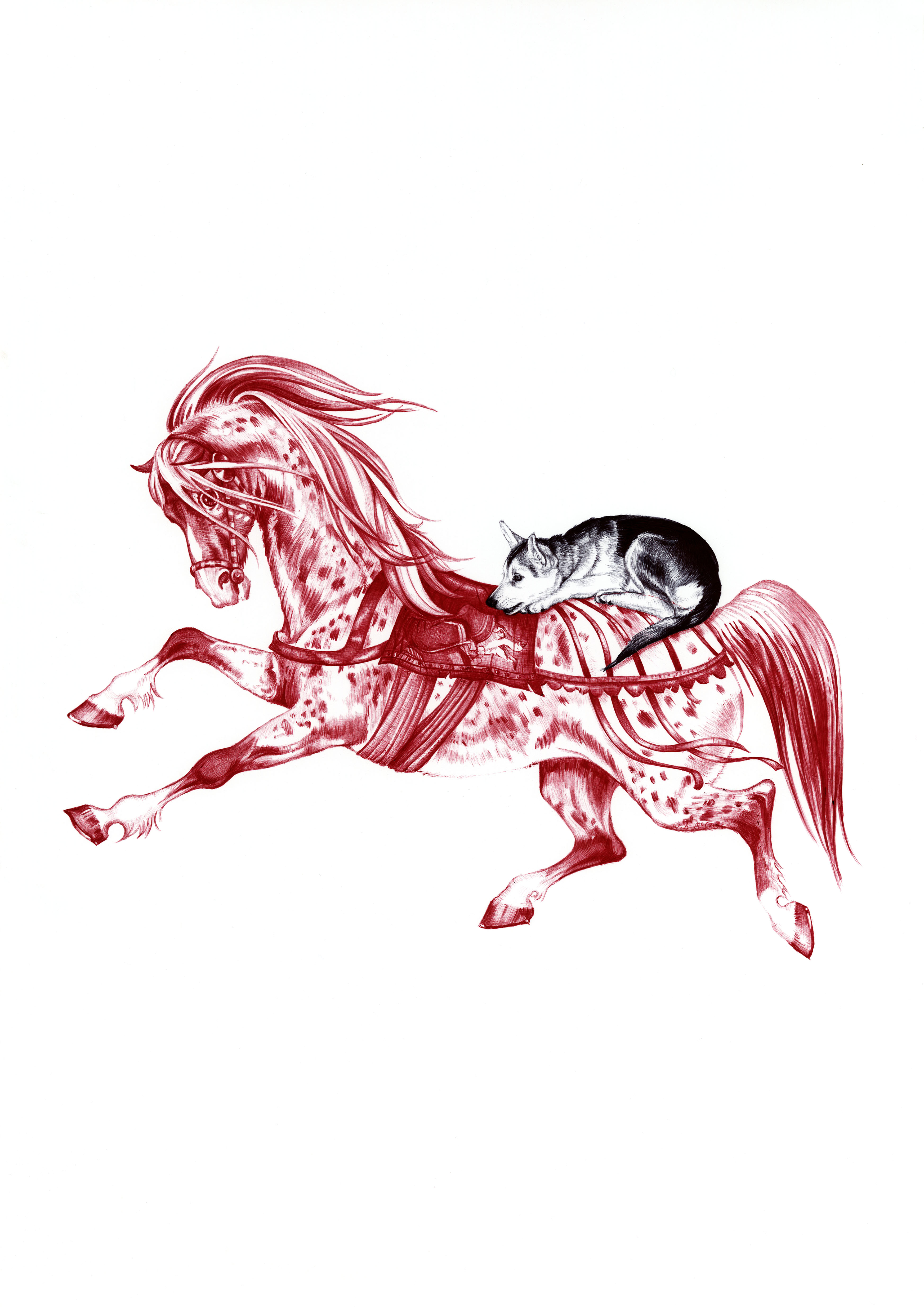
'Red Horse and the Wolf Cub - After Janet and Anne Grahame Johnstone', 2009, red and black Biro drawing by Jane Lee McCracken

‘Red Horse and the Wolf Cub – After Janet and Anne Grahame Johnstone’, 2009, red and black Biro drawing by Jane Lee McCracken

And this is the result of the photo shoot, Lily as the ‘Wolf Cub’.

Limited Edition Luxurious Archival Pigment Prints of the ‘Red Horse and the Wolf Cub’ crafted by one of the best printmaker’s in the UK Jack Lowe Studio are available from my website

The Transylvanian Miller, her Two Sons and ‘The Red Horse and the Wolf Cub’

'Red Horse and the Wolf Cub - After Janet and Anne Grahame Johnstone', 2009, red and black Biro drawing by Jane Lee McCracken

‘Red Horse and the Wolf Cub – After Janet and Anne Grahame Johnstone’, 2009, red and black Biro drawing by Jane Lee McCracken

Not Long Ago, there lived a Miller and her two sons in a watermill, in a hamlet near the Transylvanian village of Miklósvár.  The mill was the prettiest building in the hamlet with the most beautiful cottage garden and chickens clucking through the flower beds.  Although she was very old and very petite the Miller ran the mill as she had for many years with the help of her sons.  Her sons had the bluest eyes in the land and were very tall.  All she needed was contained in one small, dark room, her bed, her kitchen range, a table, a chair and her loom for weaving tapestries and rugs.

The Miller's room at the watermill, Transylvania, 2008

The Miller’s room at the watermill, Transylvania, 2008, Jane Lee McCracken

Sometimes she welcomed travellers to visit her mill to make extra leu.  One day a Scottish visitor and a Geordie visitor came to the mill.  She had baked them fresh pastries with jam which were delicious.  Her sons showed the visitors how the mill and its water wheel worked, then the Miller allowed the Scottish visitor to try weaving a rug on the loom.  Whilst weaving the visitor noticed a vibrant tapestry, hanging on the wall above the bed.  The tapestry depicted a fairy tale and underneath it the Miller sweetly slept in her bed each night.  When the tour was over the Miller stood in her garden in the sunshine waving goodbye to the visitors and her sons blinked their bright blue eyes”.

Wolf-tracking, Transylviania, 2008

Wolf-tracking, Transylviania, 2008, Jane Lee McCracken

So many aspects of our trip to Romania in 2008 have stayed with us, the breathtaking landscapes, the beautiful villages, wolf-tracking, bear-tracking and the friends we made and two wonderful nights spent with them in The Shed – a glorious watering hole in a Transylvanian village.

The Geordie and commonly known by himself, "George Bush",  The Shed, Transylvania, 2008

The Geordie and commonly known by himself, “George Bush”, The Shed, Transylvania, 2008

And the Miller and her mill.  I never forgot her standing in her garden waving to us.

The Miller's garden, Transylvania, 2008

The Miller’s garden, Transylvania, 2008, Jane Lee McCracken

During our Romanian adventure, partly in the footsteps of Patrick Leigh Fermor, (see 175 Steps with Patrick Leigh Fermor) we learned a lot about Communist oppression of the Romanian people, Communist State Terror and the purges resulting in many thousands of  lives lost at the hands of the Securitate – the Romanian Secret Police.  A tragically broken country and people, Romania only emerged from the shadow of Communism and Nicolae Ceaușescu’s regime in 1989.

Cottage in mountain village, Transylvania, 2008

Cottage in mountain village, Transylvania, 2008, Jane Lee McCracken

Remembering the Miller and her precious fairy tale tapestry, I thought of the communist purges and the Romanian peoples forcibly torn from their homes by the Securitate and the possessions left behind in the many empty properties we saw across Romania, grave memorials of the state’s barbarity.

'Join the Red Army', 1920 Ukrainian recruitment poster, artist unknown

‘Join the Red Army’, 1920 Ukrainian recruitment poster, artist unknown

To commemorate such loss during the purges I decided to make ‘The Red Horse and the Wolf Cub’.  It represents an interpretation of mass produced prints made in the 20th century of a fictional fairy tale about a ‘wolf cub’ and a ‘red horse’ and is reminiscent of Soviet Propaganda posters.  The drawing signifies how subjective art is and once selected by an individual, and displayed in their home it becomes a statement of ‘this is my taste’.  When the art work is left behind on the walls of abandoned homes, the home-owners ‘taste’ is exhibited to a silent audience or rediscovered by soldiers, refugees, other villagers or by nature.  The drawing also pays homage to Ivan Bilibin’s illustrations, particularly ‘The Red Rider’ in the Russian tale “Vasilisa the Beautiful”.

'Red Rider', "Vasalisa the Beautiful", Ivan Bilibin, 1899

‘Red Rider’, “Vasalisa the Beautiful”, Ivan Bilibin, 1899

I wondered had the Miller loved fairy tales as a young girl just as I loved my first fairy tale book illustrated by Janet and Anne Grahame Johnstone.  Incorporating a drawing in red Biro of a gypsy horse after Janet and Anne Grahame Johnstone, one of my favourite childhood illustrations, I placed Lily as a puppy playing the wolf cub, riding on the horse’s back.  On the saddle is a projection of a Russian animation of a wolf which the wolf cub is watching.

'Lily' aged 15 weeks during the photo shoot for 'The Red Horse and the Wolf Cub'

‘Lily’ aged 15 weeks during the photo shoot for ‘The Red Horse and the Wolf Cub’

The drawing also memorialises our wonderful trip to beautiful Romania.

'Red Horse and the Wolf Cub - After Janet and Anne Grahame Johnstone', 2009, red and black Biro drawing by Jane Lee McCracken

‘Red Horse and the Wolf Cub – After Janet and Anne Grahame Johnstone’, 2009, red and black Biro drawing by Jane Lee McCracken

Luxurious Archival Pigment limited edition prints of ‘The Red Horse and the Wolf Cub’, made by the excellent Jack Lowe Studio are available from my website

‘You Can Lead a Horse to Water…’ – Béla Tarr’s ‘TURIN HORSE’ in Kraków

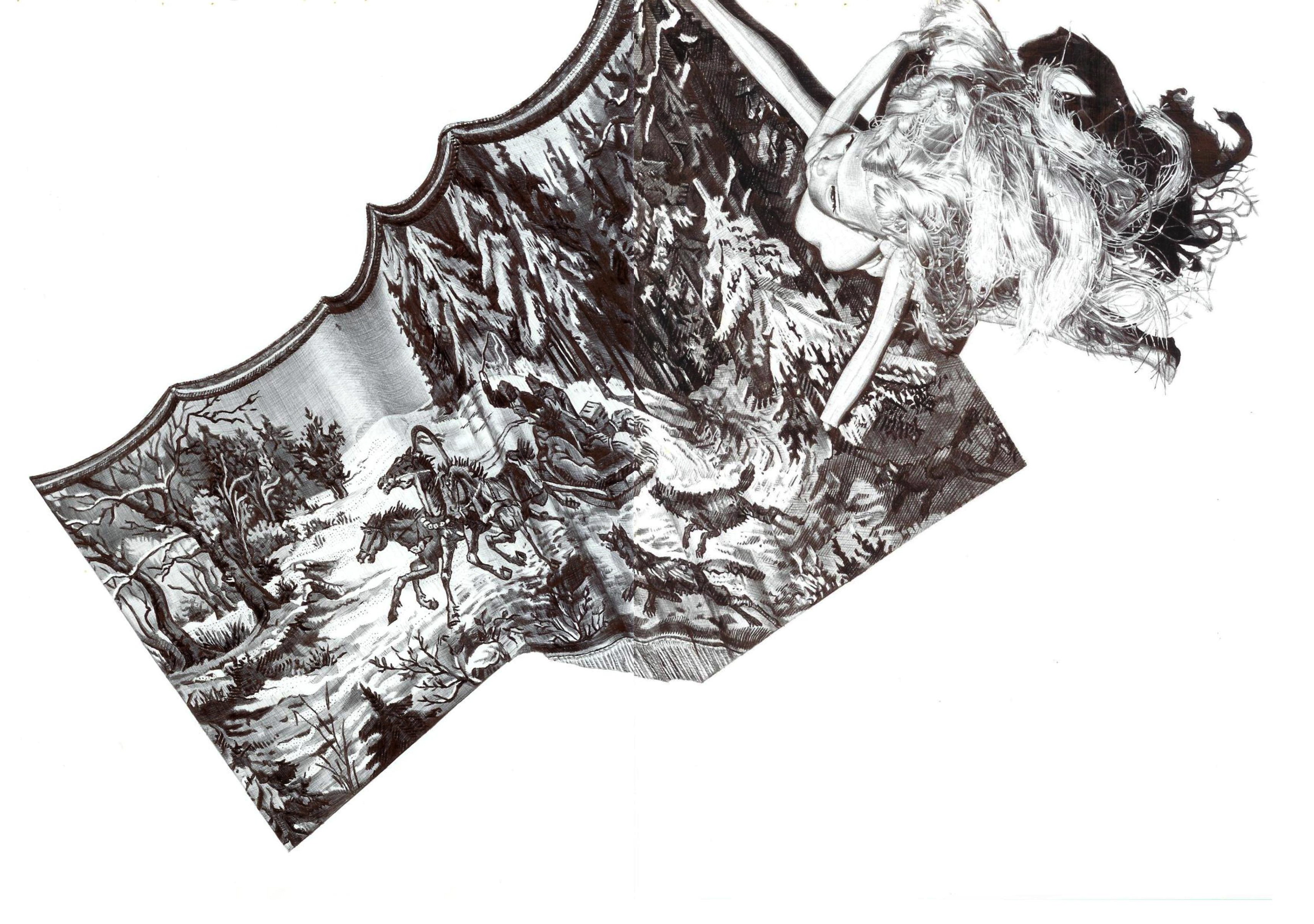
'Sindy and the Troika', black Biro drawing , 2008, by Jane Lee McCracken symbolises possessions left behind when people flee their homes during war or disaster.

‘Sindy and the Troika’, black Biro drawing , 2008, by Jane Lee McCracken

Incessant winda dirge of clawing violins on repeat… ’Doom’ on his hands and knees, crawling ever closer with each sunset, along his impending trail of inevitable cataclysm, until finally he reaches the desolate cottage on the Hungarian plains.

Bela Tarr’s finale to his epic film-making career ‘Turin Horse’ is a triumph of Apocalyptic cinema.  In the beginning: a black screen and Tarr’s voice narrating a vigil of white text informs us that on 3rd January 1889 in Turin, Friedrich Nietzsche reached out to protect a horse being beaten by its owner, experienced a terminal breakdown and lived a further ‘silent and demented’ 10 years until his death… “We do not know what happened to the horse.”

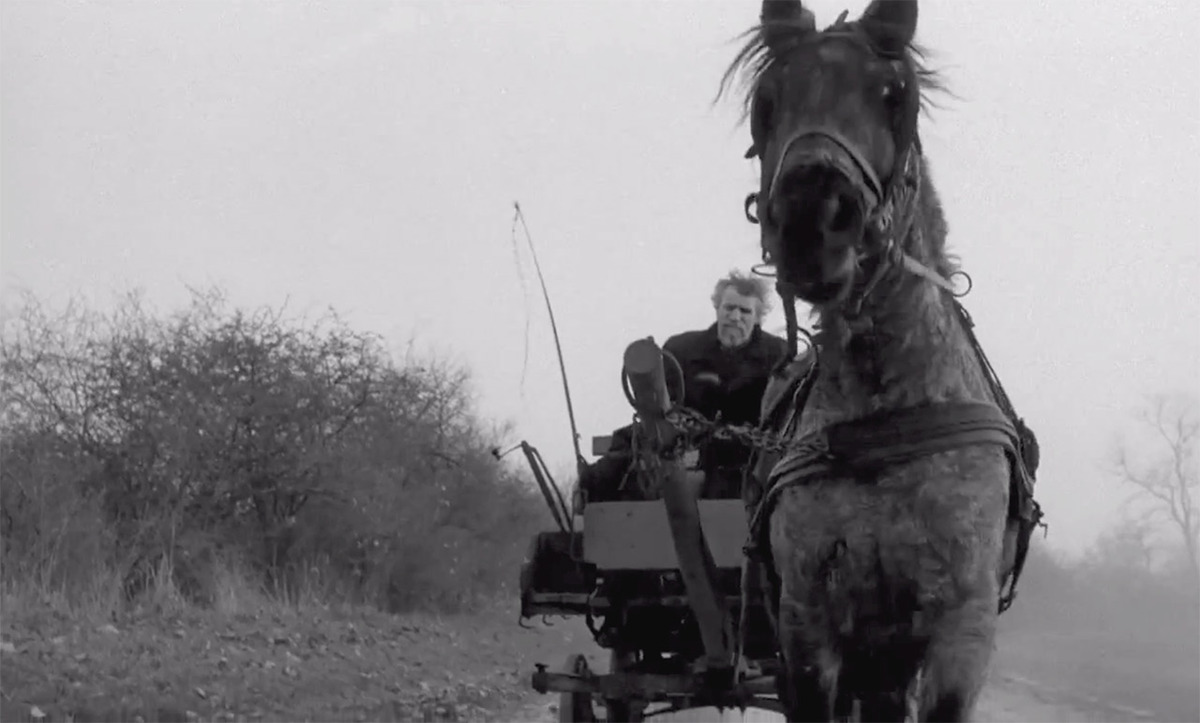
Opening scene, 'Turin Horse', Béla Tarr, 2011

Opening scene, ‘Turin Horse’, Béla Tarr, 2011

The Wind Blows Where it Wishes: an elderly man driving his horse and cart, battle through an abrasive gale along a country road, escorted by Mihály Víg’s vulturous score, reminiscent of Philip Glass’s composition for ‘Candyman’, until they finally reach an isolated cottage.  A woman steps from the shadows of a barn to help the old man unbridle the horse and lead it to stable and rest.  The bait is eaten as we are reeled in by our temptation to find out what happens next…not much and yet so much.  No names, no histoire and a minimalist script, Béla Tarr leaves us virtually at the mercy of the mesmerising, monochrome cinematography of Fred Kelemen.

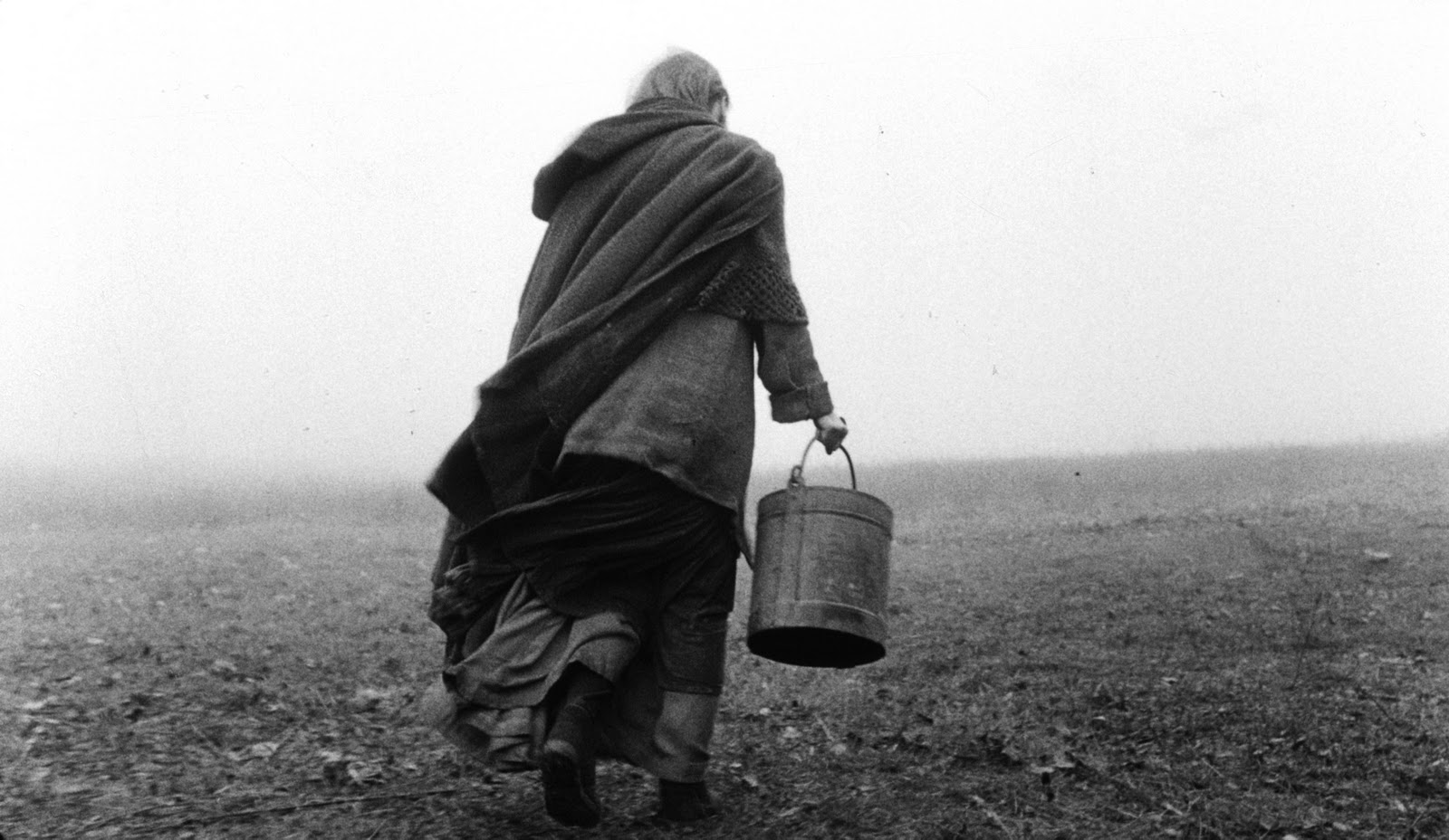
'Daughter' trudging to the well in 'Turin Horse', Béla Tarr, 2011

‘Daughter’ trudging to the well, ‘Turin Horse’, Béla Tarr, 2011

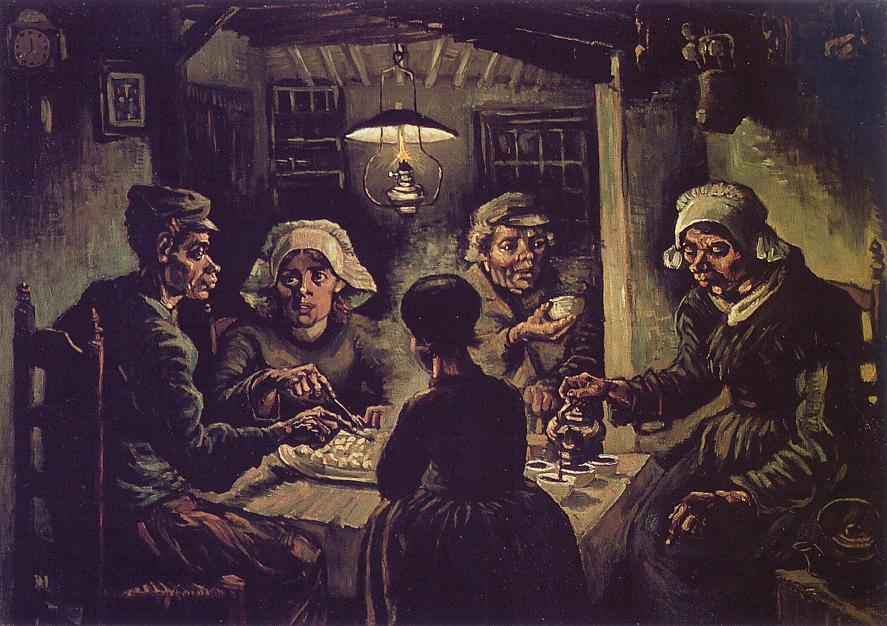
From the unbuttoning and buttoning of tattered clothes, folding of linen and the skinning by hand of hot boiled potatoes to reach the piping flesh; the daughter’s gruelling daily walk to the well in the prophetic wind to fetch water, we watch almost as if in real time 6 days of peasant hardship, grind and repetitive misery, that are the lives of an old man and his daughter in their dark, aged cottage whilst Abaddon rages outside.  Tarr’s appreciation of such adversity brings us perhaps as close as we can come to watching how our 19th century peasant forebears lived, and is almost the triumph of the film.  In parallel, Tarr’s vision gives us what Van Gogh gave us with ‘The Potato Eaters’ a wish to spare us nothing,

'The Potato Eaters', Vincent Van Gogh, 1885

‘The Potato Eaters’, Vincent Van Gogh, 1885

“You see, I really have wanted to make it so that people get the idea that these folk, who are eating their potatoes by the light of their little lamp, have tilled the earth themselves with these hands they are putting in the dish, and so it speaks of manual labor and — that they have thus honestly earned their food. I wanted it to give the idea of a wholly different way of life from ours — civilized people. So I certainly don’t want everyone just to admire it or approve of it without knowing why.”, Vincent Van Gogh“Letter 497”, The Letters, Van Gogh Museum, Amsterdam.

Almost the triumph of the film, but not quite.

Whilst the camera focuses on a black blizzard of bird-like leaves wheeling through the foreground, the father and daughter leading their horse, their well now empty of water, attempt to escape the world counting down to oblivion.  As their tragic out of focus figures wrestle along the distant horizon of a ridge with a single tree, I can feel the gentle breath from Lily’s canine nose on my hand as she lies beside me on the sofa. Like the quiet grace of the ‘horse’, Lily’s reassuring, measured breaths during that bleak scene reinforce the innocence humanity literally holds in its hands, a ‘key point’ of Tarr’s film.

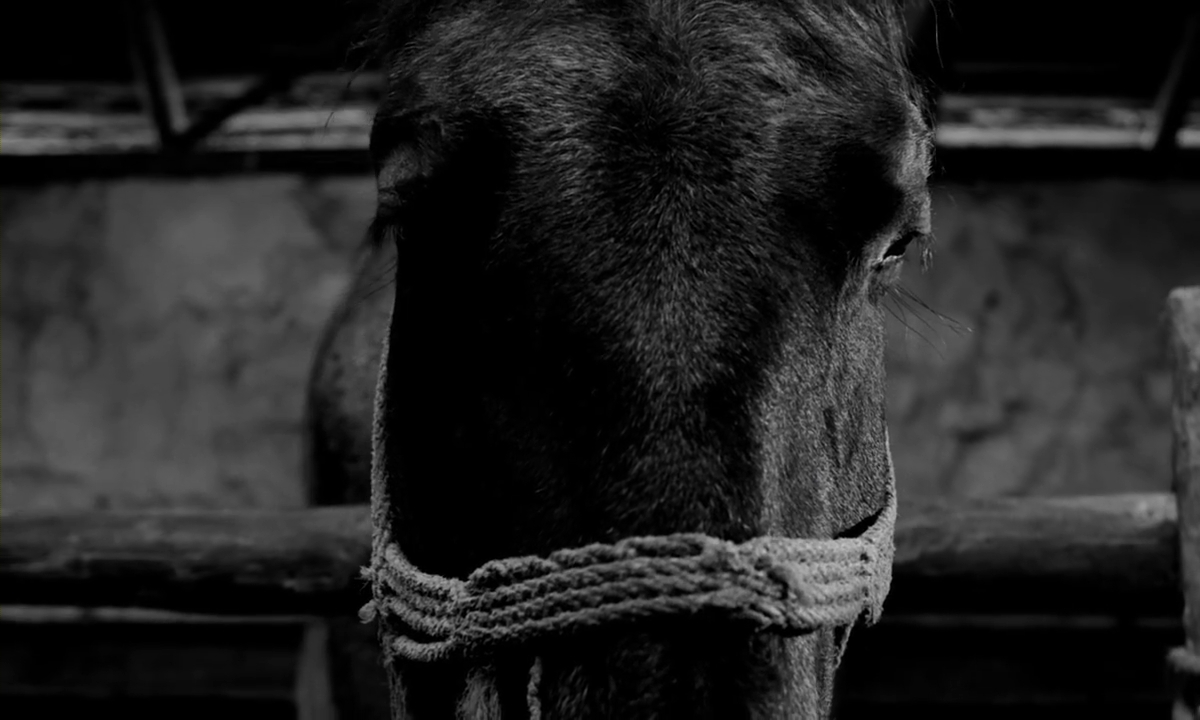
'Horse', 'Turin Horse', Béla Tarr, 2011

‘Horse’, ‘Turin Horse’, Béla Tarr, 2011

And Darkness was on the Face of the Deep: The triumph of the film is the horse. Her dignity, the majesty with which her whole being seems to say ‘humanity you led us all to this, and now there is not even water to drink’.  The horse is our prophet, her intelligence far surpasses ours as she warns us life as we know it is over, that we have lost light and we are now plunging back into the darkness before creation, by man’s hand and Nature’s.

“The key point is that the humanity, all of us, including me, are responsible for destruction of the world. But there is also a force above human at work – the gale blowing throughout the film – that is also destroying the world. So both humanity and a higher force are destroying the world.” Bela Tarr, 2011

Bar in Kraków, 2007

Bar in Kraków, 2007

Watching ‘Turin Horse’ reminded me of a drawing I did in 2008 after a trip to  Kraków, ‘Sindy and the Troika’, which visited a theme I have often explored; fear and transpiration from the approach of a warring army.  We were staying in Kazimierz, which was once the heart of Jewish Kraków until the Nazis mercilessly ‘cleared’ the ghetto in WWII, depicted in Steven Spielberg’s film ‘Schindler’s List’, sending most of its Jewish inhabitants to their demise in nearby death camps like Auschwitz.

Kraków bar with Singer sewing machine as table, 2007

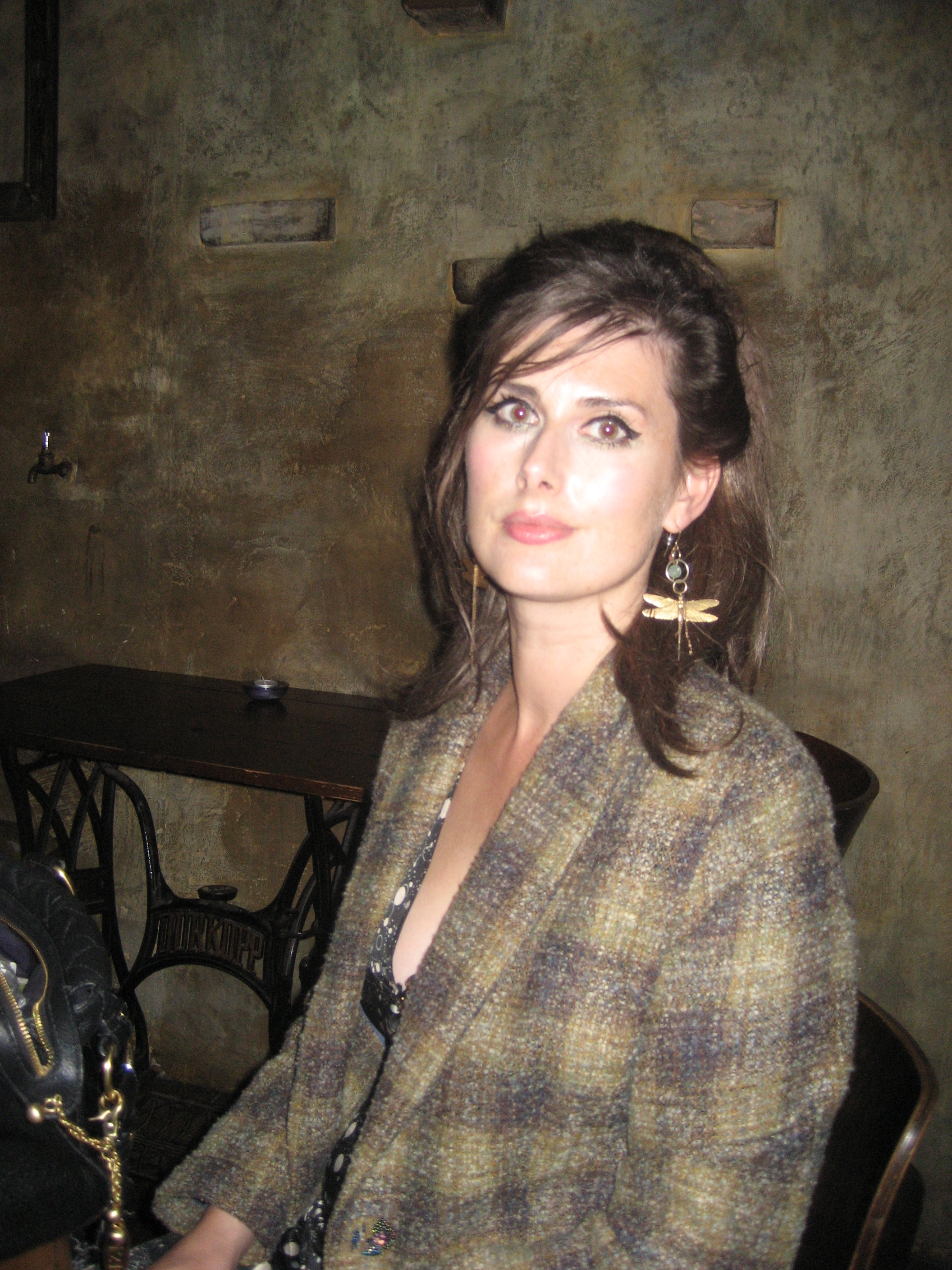
Me in another Kazimierz bar furnished with Singer sewing machine tables, Kraków, 2007

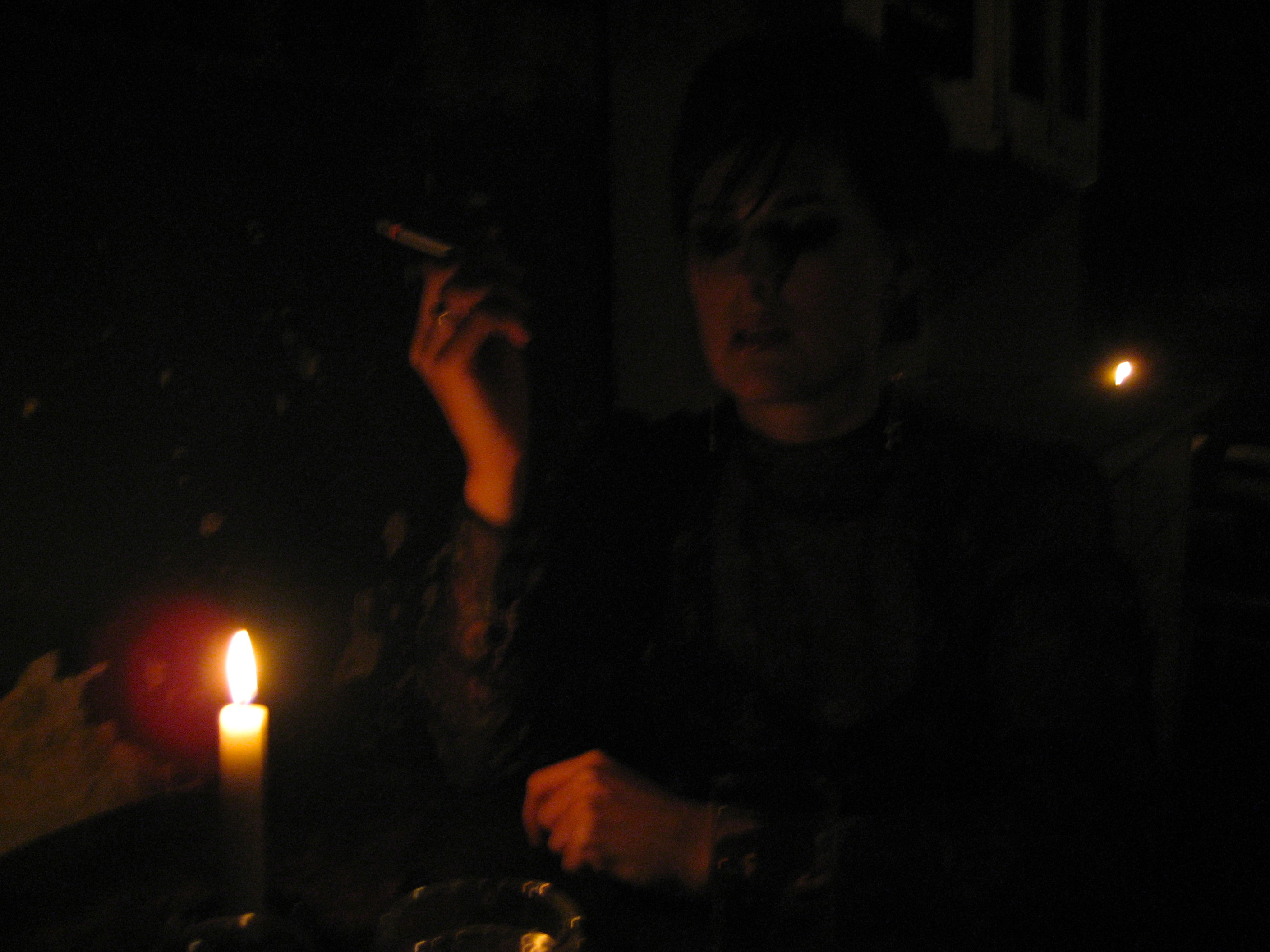
Kazimierz is now a vibrant art and cafe culture district and it was whilst in one of the many beautiful bars, which include bars like ‘Singer’ furnished with Singer sewing machine tables, that I found inspiration for the drawing.  I often contemplate the hellish fear that must overtake people when they are awaiting the onslaught of an enemy army. Documentaries are an audio visual record of this, but sitting in a room, that was originally a ghetto room where probably too many inhabited too few square feet, was sobering even with several Żubrówka‘s sunk accompanied by Polish cigarettes.

Kraków bar, 2007

Kraków bar, 2007

The room seemed to have been left just as if its inhabitants had walked out the door to find food, although perhaps they weren’t searching for food, perhaps they had fled from what must almost feel like the invasion of an alien army of super-humans from another planet as their wrath seems beyond that of civilised members of our own species.

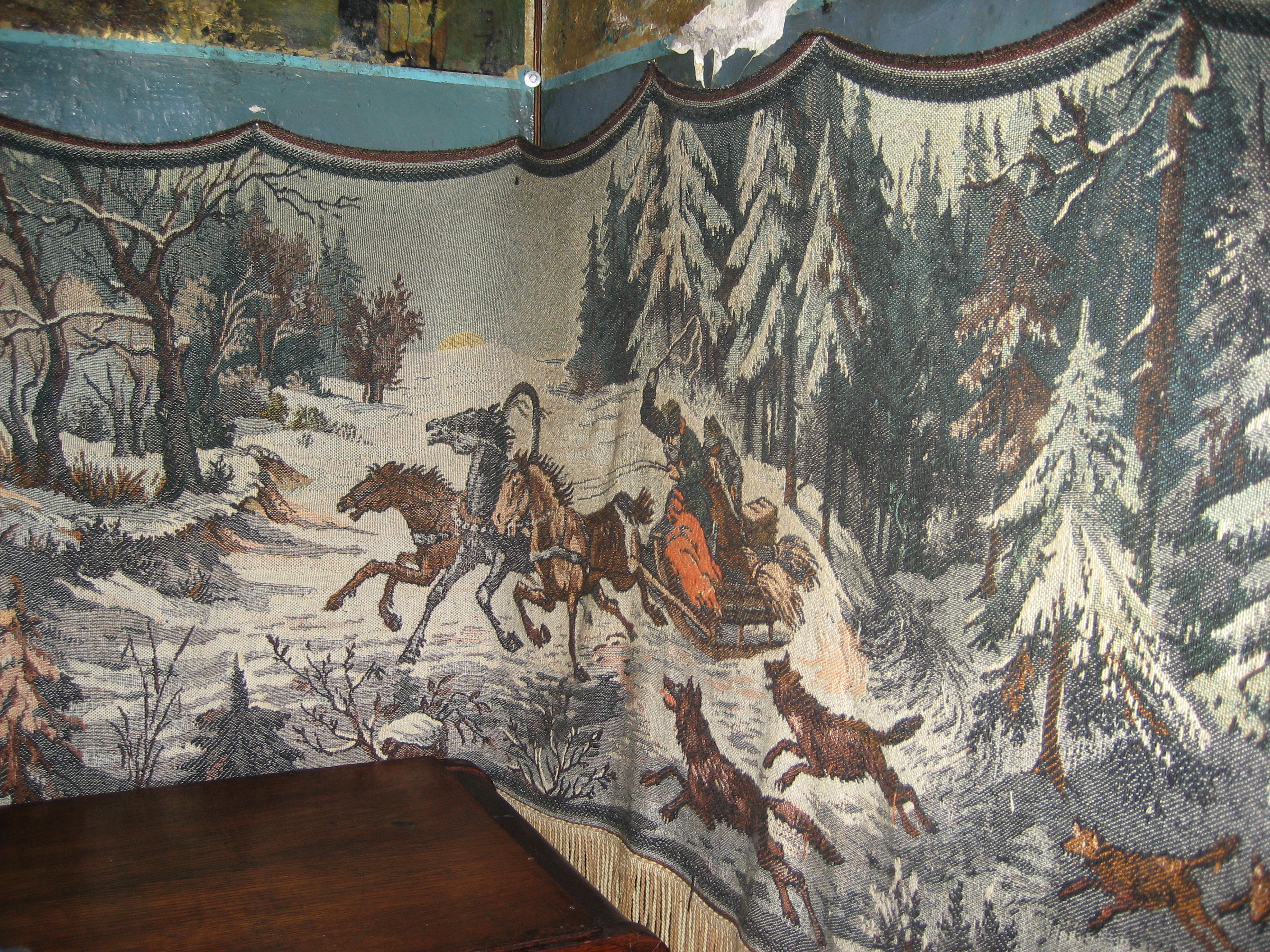
Tapestry in Kraków bar, 2007

Vintage Russian Tapestry in Kraków bar, 2007

The bar owners had decorated the bar with a kitsch vintage tapestry of wolves hunting a man driving a troika.  I wondered where the tapestry had come from, I imagined it as the type of possession left by fleeing civilians not just across Poland but Europe – a cottage perhaps where the inhabitants left their favourite tapestry and their children’s toys for the hellfire of the oncoming German army or from fear of retaliation from the Allied Armies.

Official USSR photograph of Red Army in combat WWII, Artist's own collection.

The end of the Battle of Stalingrad turns the tide of war and the Red Army begin their offensive and fight their way to Berlin, often taking revenge for the inconceivable brutality perpetrated by the Wehrmacht on Russian civilians.  Official USSR photograph of Russian soldiers in combat, WWII, 1944, Artist’s own collection.

In the drawing the dishevelled, handless Sindy doll represents the brutality often waged upon civilian populations during war as well as the memories of children at play before fate’s hand led them to their destiny.  The tapestry symbolises life preceding war, of a beautiful forest and traditions and landscapes lost forever to war.  And like the father and daughter in ‘Turin Horse’, many families met their uncertain fates together.

'Sindy and the Troika', black Biro drawing , 2008, by Jane Lee McCracken symbolises possessions left behind when people flee their homes during war or disaster.

‘Sindy and the Troika’, black Biro drawing , 2008, by Jane Lee McCracken symbolises possessions left behind when people flee their homes during war or disaster.

For further information and Luxury Archival Prints made to order by one of the best printmaker’s in the UK Jack Lowe Studio please visit my website.

‘Lily and the Kids’ – In the Deep, Dark Forests of Europe

'Lily and the Kids', 2012, Biro drawing and vintage German postcard, by Jane Lee McCracken (postcard Artist's own collection bought on Ebay)

‘Lily and the Kids’, by Jane Lee McCracken, 2012, quilt square design, blue and black Biro drawing and vintage German postcard of Der Wolf und die sieben Geißlein

Once upon a time there lived a Woodcutter in a cottage, deep in the forests of Europe, who collected images and objects.  No one ever saw the Woodcutter for he was a recluse and preferred the company of the forest animals rather than people.  But he saw everything, the good and the bad.  At first life and death as Nature intended and in time, life and death in Man’s own way.  The Woodcutter’s only companion was a television set where he gained his knowledge of the world outside the forests through film.  The forest animals came and went over time, the people and the wars.  And in response to all he saw in the forests and on the screen he made art – drawings and objects to remember the animals and people by and to ask ‘WHY?'”

‘Lily and the Kids’ is the first of a quintet of quilt squares specifically designed for ‘The Woodcutter’s Quilt’ which was part of the installation for ‘The Woodcutter’s Cottage’ Exhibition.  The quintet was created using black, blue and colour Biro drawings, vintage postcards bought on Ebay from my own collection and stills from Russian animation films.

'The Woodcutter's Quilt', 2012, transfers on calico, hand embroidery and black silk by Jane Lee McCracken

‘The Woodcutter’s Quilt’, 2012, transfers on calico, hand embroidery and black silk by Jane Lee McCracken

The other four squares include:

‘Bear’

'Bear', 2012, colour Biro drawing and vintage German Postcard by Jane Lee McCracken (Postcard Artist's own collection bought on Ebay)

‘Bear’, by Jane Lee McCracken, 2012, quilt square design, colour Biro drawing and vintage German postcard of Snow White

‘Ice Fox’

'Ice Fox', 2012, colour Biro drawing and digital montage of Ivan Bilibin postcard by Jane Lee McCracken

‘Ice Fox’, by Jane Lee McCracken, 2012, quilt square design, colour Biro drawing and Ivan Bilibin postcard

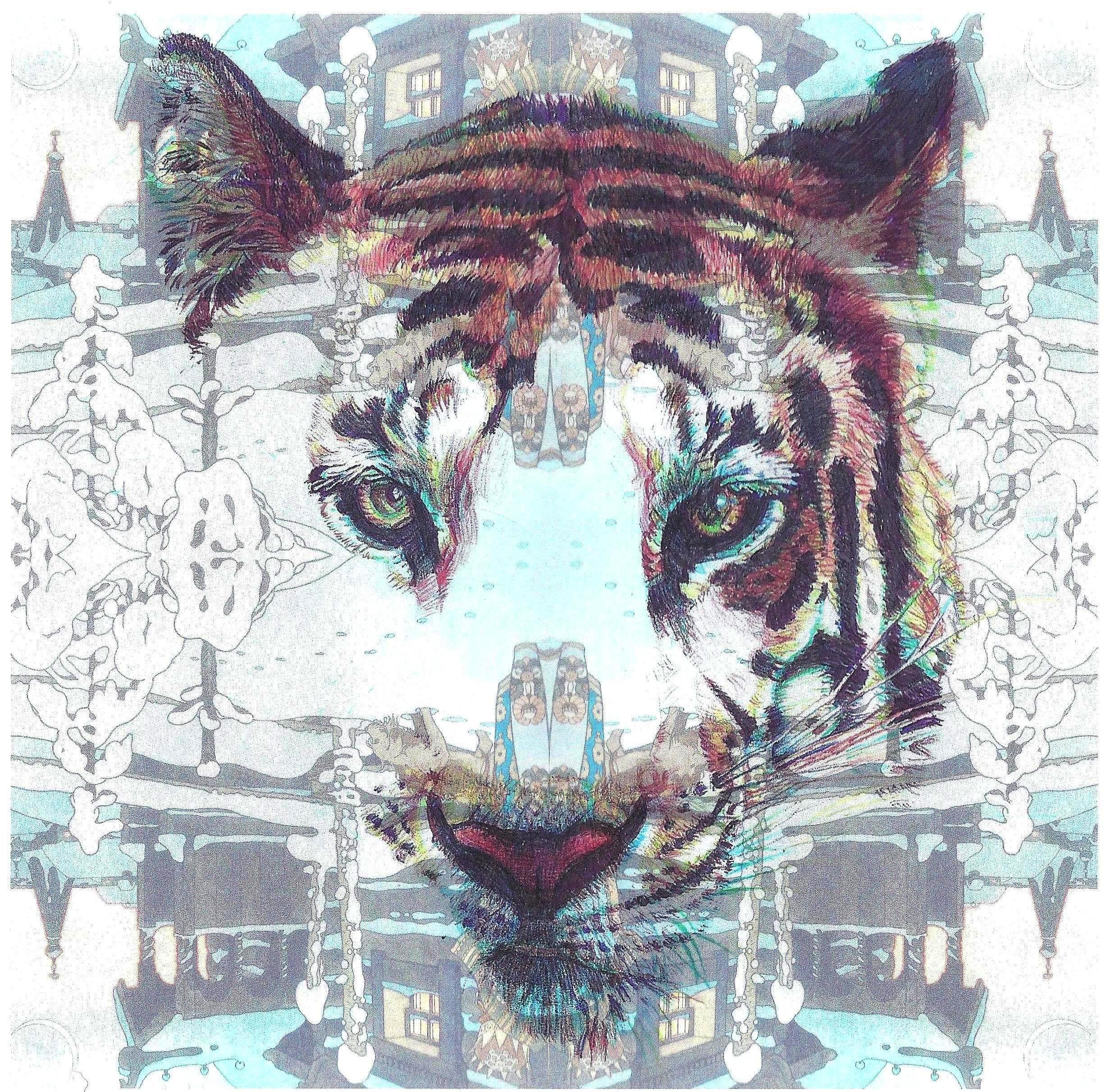
‘Siberian Tiger’

'Siberian Tiger', 2012, colour Biro drawing and digital montage of Ivan Bilibin postcard by Jane Lee McCracken

‘Siberian Tiger’, Jane Lee McCracken, 2012, quilt square design, colour Biro drawing and Ivan Bilibin postcard

‘Doll, Pink Boris and the Rabbit’

'Doll, Pink Boris and The Rabbit', 2012 colour Biro drawing and montage of Artist's still of the animation 'Fox and Rabbit' by Yuri Norstein, by Jane Lee McCracken

‘Doll, Pink Boris and The Rabbit’, Jane Lee McCracken, 2012, quilt square design, colour Biro drawing and Artist’s still of the animation ‘Fox and Rabbit’ by Yuri Norstein, 1973

‘Lily and the Kids’ and ‘Bear’ limited edition Archival Pigment Prints made by the excellent Jack Lowe Studio are sold with profits donated to the Wolves and Humans Foundation

‘Ice Fox’ and ‘Siberian Tiger’ limited edition Archival Pigment Prints also made by Jack Lowe Studio are sold with profits donated to the Born Free Foundation

For further information on prints please visit my website 

HAPPY BURNS DAY!

And to the Haggis,

“Fair fa’ your honest, soncie face,

Great Chieftain o’ the puddin race”

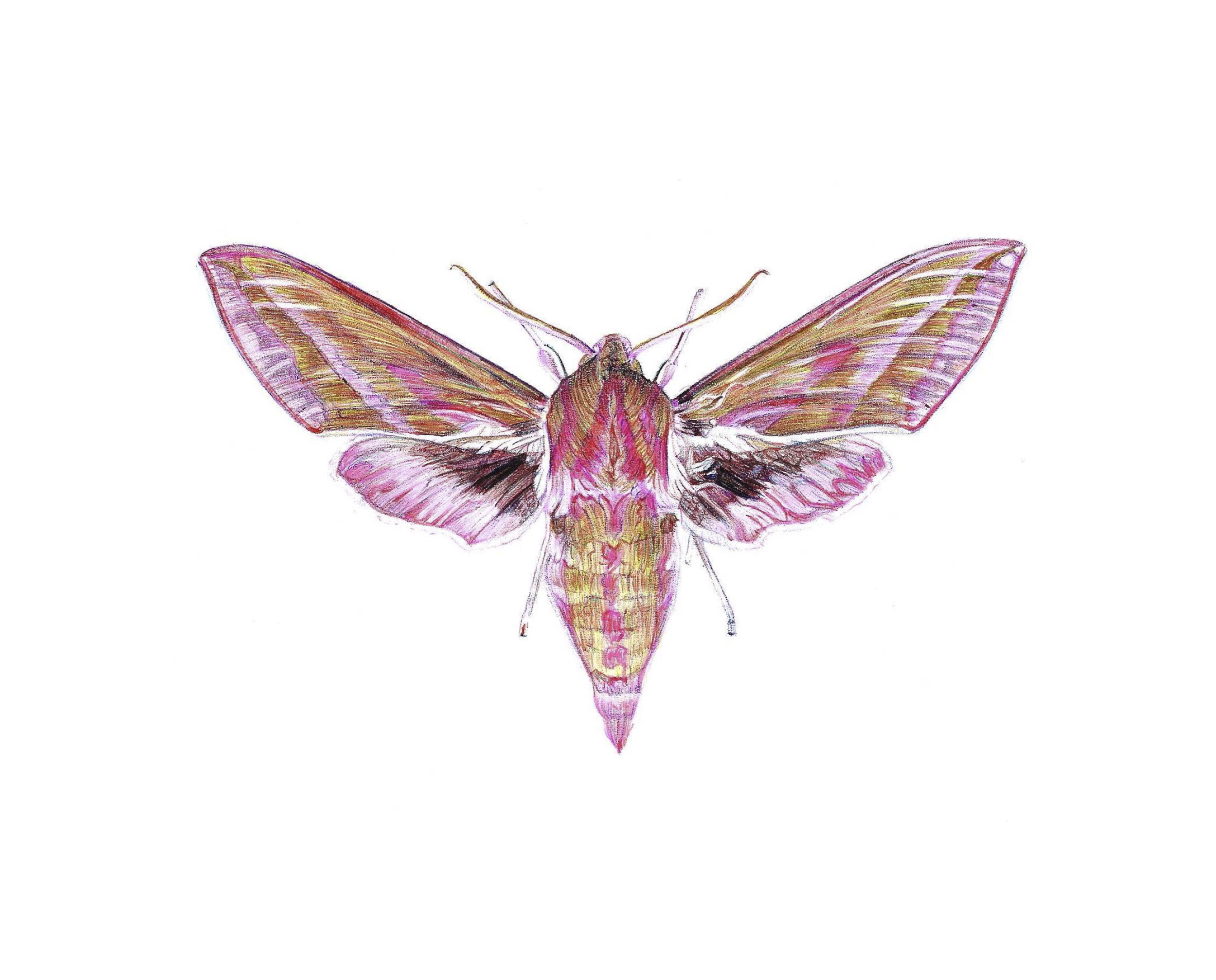
Death’s-head Hawkmoth (Acherontia atropos) – Biro Drawing Moth Series

'Death's-head Hawkmoth', 2012, colour Biro drawing by Jane Lee McCracken

‘Death’s-head Hawkmoth’, 2012, colour Biro drawing by Jane Lee McCracken

‘Death’s-head Hawkmoth’, is the first of a quartet of colour Biro drawings of British Moth species celebrating the beauty of moths.  The drawings were created as integral elements in the pattern design for the ‘British Moth Throw’, made in 2012.

'British Moth Entomology Drawer', 2013 by Jane Lee McCracken, the Mercer Gallery Harrogate.  Dressing table is Artist's Grandmother's, circa 1940

‘British Moth Entomology Drawer’, 2013 by Jane Lee McCracken, the Mercer Gallery Harrogate. Dressing table is Artist’s Grandmother’s, circa 1940

The ‘British Moth Throw’ illustrates the beauty of moths and attempts to dispel their image as dusty, cloth eaters whilst highlighting the rapid and devastating depletion of many British Moth species.

'The British Moth Throw', 2012, detail, hand-cut transfers on calico

‘British Moth Throw’, 2012, detail, hand-cut transfers on calico

'The British Moth Throw', 2012, detail, hand-cut transfers on calico

‘British Moth Throw’, 2012, detail, hand-cut transfers on calico

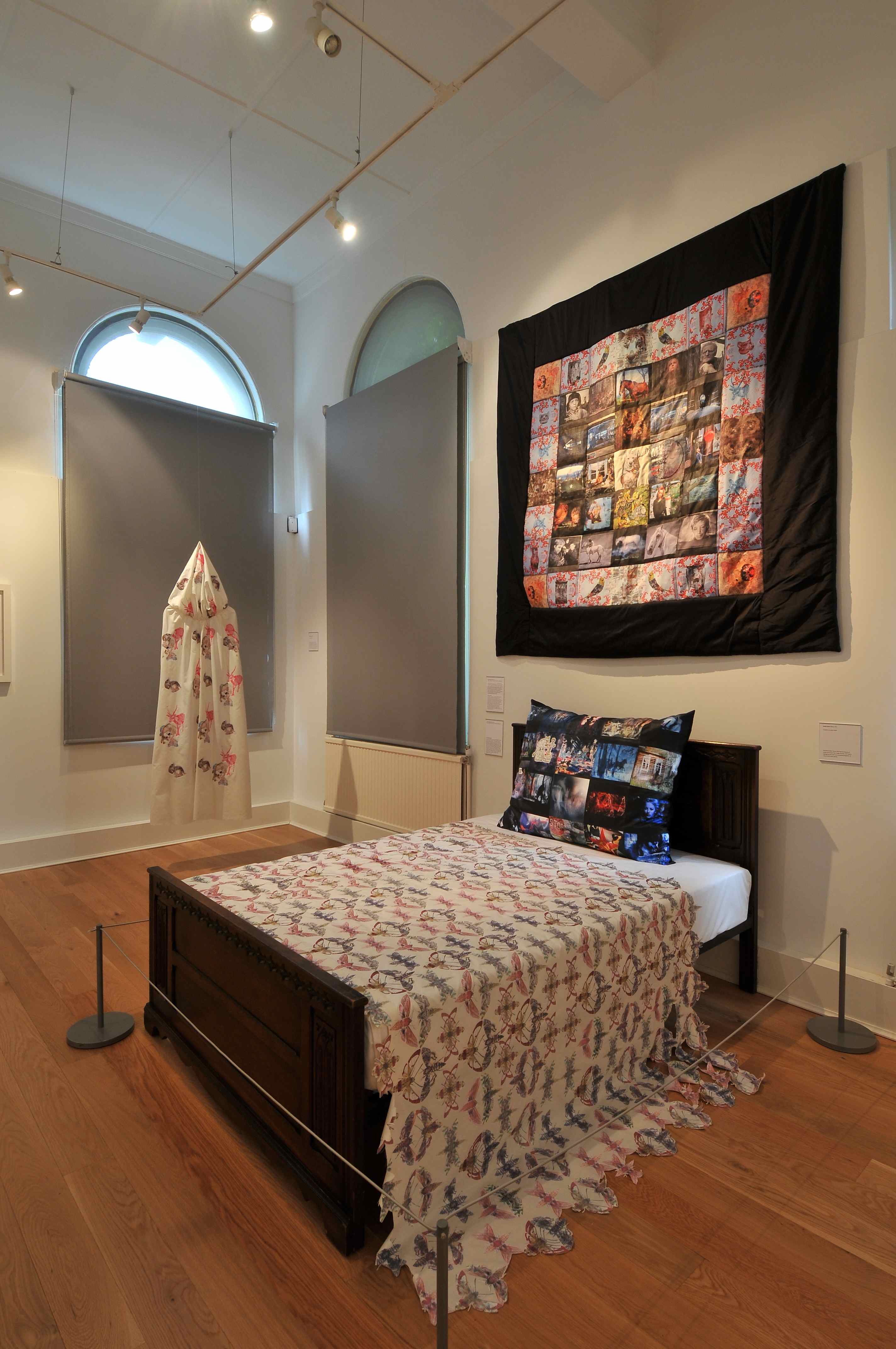
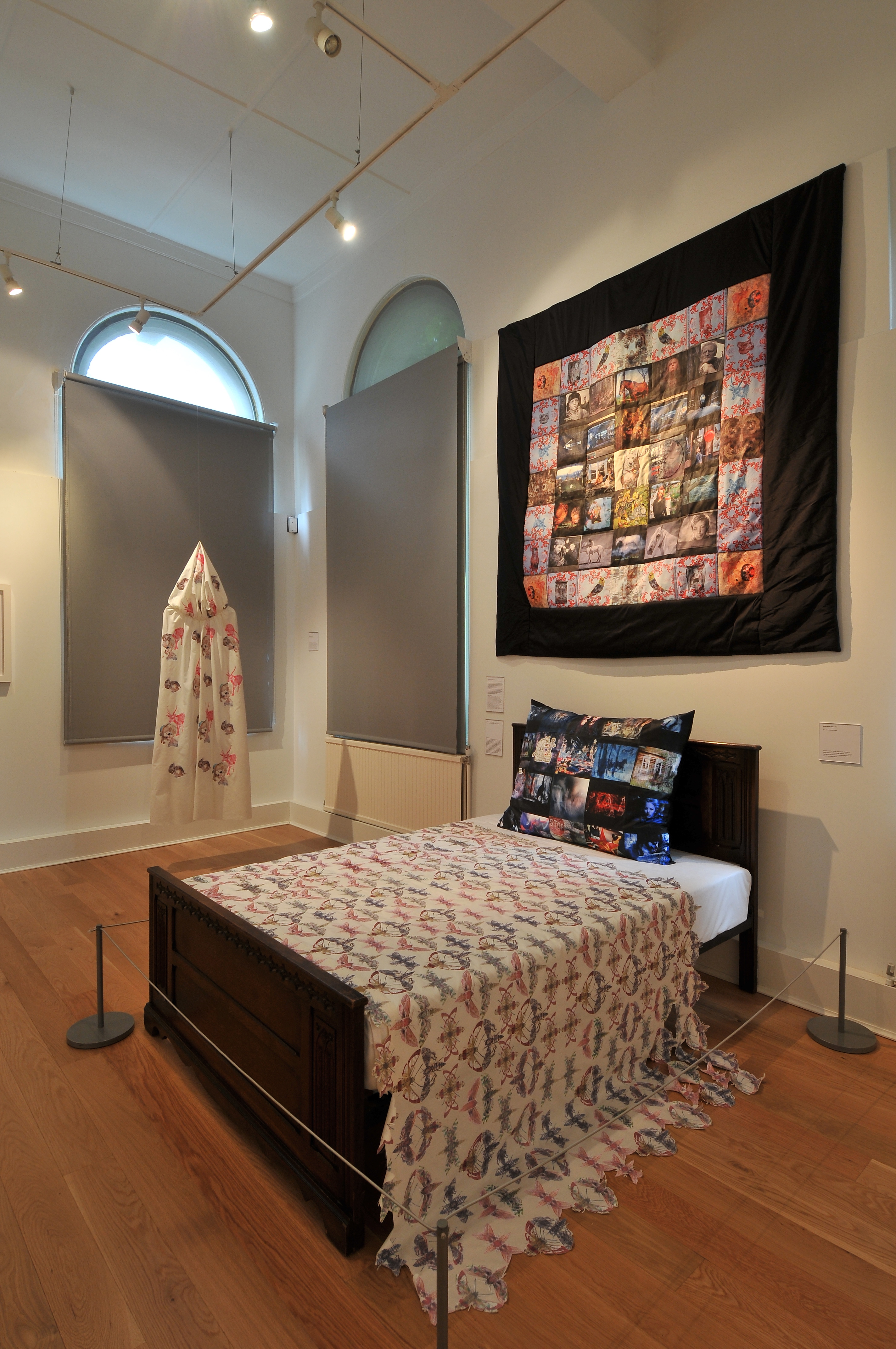
Made from printed transfers, hand-cut and applied to calico the throw is displayed on the Artist’s Grandmother’s Jacobean bed, circa 1940.

'British Moth Throw' displayed in 2013 at the Mercer Art Gallery, Harrogate - Artist's Grandmother's bed circa 1940

‘British Moth Throw’ displayed in 2013 at the Mercer Art Gallery, Harrogate – Artist’s Grandmother’s bed circa 1940

Prints of the British Moths series are available from my website shop and are sold in aid of UK charity ‘Butterfly Conservation’

'Small Elephant Hawk-moth', 2012, colour Biro drawing by Jane Lee McCracken

‘Small Elephant Hawk-moth’, 2012, colour Biro drawing by Jane Lee McCracken

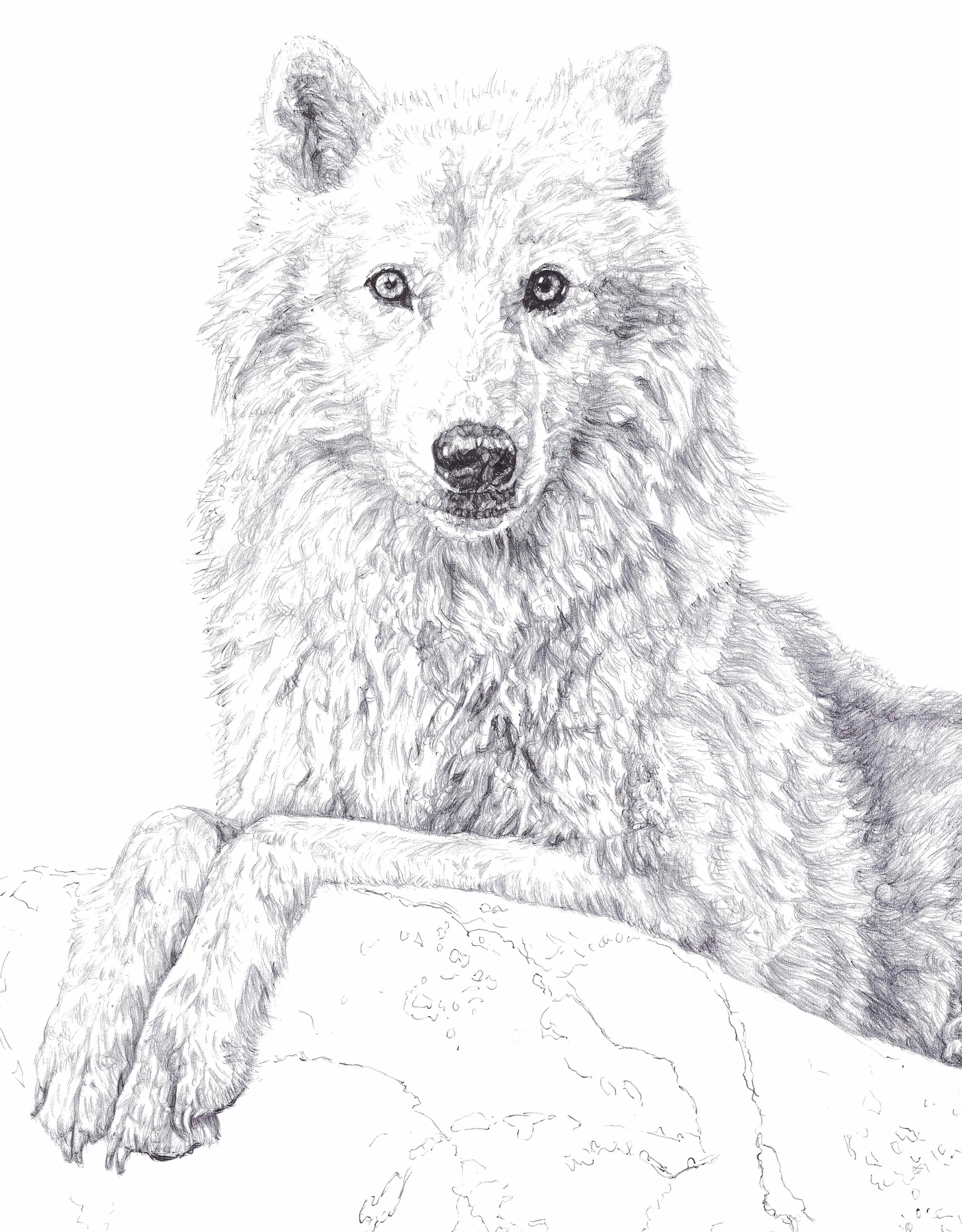
‘ATKA’ Wolf Drawing Raises over $1500 for Wolf Conservation Center

'Atka', 2013, original black Biro drawing

‘Atka’, 2013, original black Biro drawing by Jane Lee McCracken

‘Atka‘ original Biro drawing was auctioned on 13th December 2013 at the Wolf Conservation Center, NY‘s annual Wine and Wolves fundraiser.  Thank you so, so much to the winner and I hope you enjoy your drawing!  Every dollar helps the Wolf Conservation Center, NY promote the conservation and protection of wolves.  For more information about magnificent Atka and his friends please visit WCC, NY’s website.

Since the auction a luxury print edition of the original ‘ATKA’ drawing has been released and ALL profits from the sale of each print will be donated to the WCC for wolf conservation.

Luxurious Archival Pigment Prints on Hahnemühle Photo Rag 308gsm from the original Biro drawing are especially made to order crafted by prestigious photographer Jack Lowe of Jack Lowe Studio one of the best printmaker’s in the UK.

To purchase an ‘Atka’ print or for further information:

www.janeleemccracken.co.uk/shop/conservation art prints

'Atka', 2013, detail from original black Biro drawing

‘Atka’, 2013, detail from original black Biro drawing

‘Little Red Riding Hood’s Cloak’ – Smashing the Stereotypes?


'Doll and Pink Boris', 2011, colour Biro drawing by Jane Lee McCracken, part of design for 'Red Riding Hood's Cloak' fabric pattern

‘Doll and Pink Boris’, 2011, colour Biro drawing by Jane Lee McCracken, part of design for ‘Red Riding Hood’s Cloak’ fabric pattern

Little girls, this seems to say,
Never stop upon your way.
Never trust a stranger-friend;
No one knows how it will end.
As you’re pretty, so be wise;
Wolves may lurk in every guise.
Handsome they may be, and kind,
Gay, or charming never mind!
Now, as then, ‘tis simple truth—
Sweetest tongue has sharpest tooth!

Charles Perrault, Le Petit Chaperon Rouge,1697

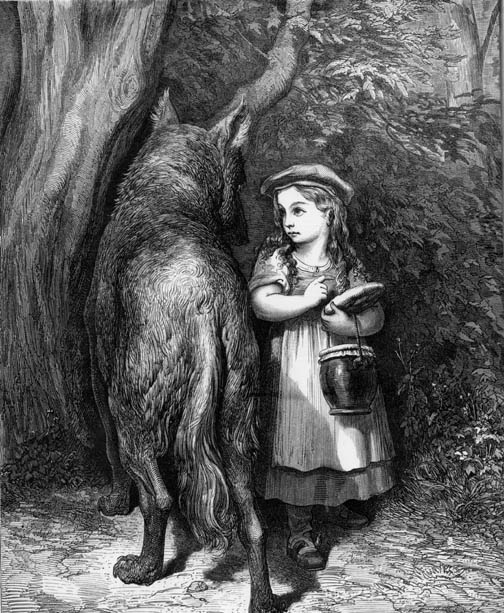
"Les Contes de Perrault" dessins par Gustave Doré. Paris: J. Hetzel, 1867

“Les Contes de Perrault” dessins par Gustave Doré. Paris: J. Hetzel, 1867

‘Red Riding Hood’s Cloak’ 2012, was conceived for the ‘The Woodcutter’s Cottage’ Solo Exhibition shown at the Customs House Gallery, South Shields and The Mercer Art Gallery, Harrogate.  This piece focuses on the interpretation of ‘Little Red Riding Hood’, as a parable to sexual maturity.  An ancient oral fairy tale, ‘Little Red Riding Hood’ was first published by Charles Perrault as ‘Le Petit Chaperon Rouge’ in 1697.  ‘Rotkäppchen’ written by Jacob and Wilhelm Grimm in 1812 remains the most popular version to date. However, a different oral tale registered as far back as 1st century AD, ‘The Wolf and the Kids’ is now thought to be the originator of ‘Little Red Riding Hood’ on the evolutionary tree of Fairy Tales, creating a separate branch for this most famous story.

"Les Contes de Perrault" dessins par Gustave Doré. Paris: J. Hetzel, 1867

“Les Contes de Perrault” dessins par Gustave Doré. Paris: J. Hetzel, 1867

Recent studies by anthropologist Dr Jamie Terhani of Durham University, suggest that ‘Little Red Riding Hood‘, which was once thought of as a tale that originated “in Chinese oral tradition”and “spread west, along the Silk Route” eventually creating the European versions of ‘The Wolf and the Kids’ and ‘Little Red Riding Hood’ is now thought to have derived from European oral traditions, “and not vice versa”.  Dr Jamie Terhani, ‘Science on the trail of The Wolf and Little Red Riding Hood’, Durham University News November 2013
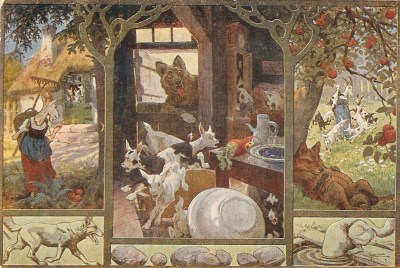
"Der Wolf und die sieben jungen Geißlein", vintage German postcard, Artist's collection

“Der Wolf und die sieben jungen Geißlein”, vintage German postcard, 1915, Artist’s collection

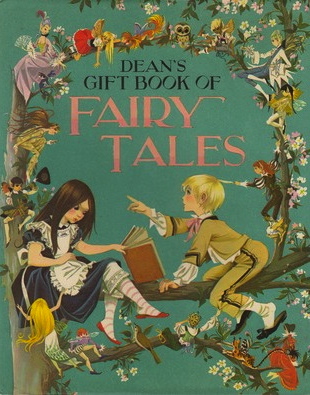
My first fairy tale book illustrated by Janet and Anne Grahame Johnstone first published 1967

My first fairy tale book illustrated by Janet and Anne Grahame Johnstone, published 1967

Often considered as precautionary and educational fables orated by our forefathers to both adults and children, fairy tales have also long since been scrutinised by the likes of Freud and Jung for their psychoanalytic qualities.  Freud compared fairy tales to dreams, revelations of the unconscious mind, exposing our hidden fears and desires.  Freud’s all encompassing quote succinctly captures his opinion of man:

“Those who love fairy-tales do not like it when people speak of the innate tendencies in mankind toward aggression, destruction, and, in addition, cruelty. God has made them in his own image, with his own perfections; no one wants to be reminded how hard it is to reconcile the undeniable existence-in spite of all the protestations of Christian Science-of evil with His omnipotence and supreme goodness.”  Freud, 1856-1939
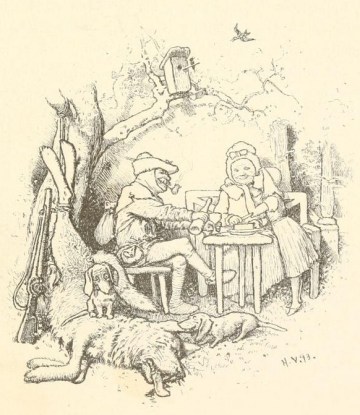
Illustration by Hermann Vogel of Wolf slain by Huntsman

Illustration for Grimm’s ‘Rotkappchen’, 1893, by German illustrator Hermann Vogel (1854-1921), Wolf slain by Huntsman

Jung however treads a longer, deeper path, developing the idea of ‘Collective Unconcious’, the ‘inborn’ unconscious mind, common to a collective species such as man, originating from the ancestral organisation of shared experiences, and naming ‘pre-existent’ unconscious forms as ‘Archetypes’.

“The concept of archetypes as the mode of expression of the collective unconscious is discussed. In addition to the purely personal unconscious hypothesised by Freud, a deeper unconscious level is felt to exist. This deeper level manifests itself in universal archaic images expressed in dreams, religious beliefs, myths, and fairy tales. The archetypes, as unfiltered psychic experience, appear sometimes in their most primitive and naive forms (in dreams), sometimes in a considerably more complex form due to the operation of conscious elaboration (in myths).”  Jung, 1875-1961

Sarah Patterson, 'The Company of Wolves', Neil Jordan, 1984

Film still of Sarah Patterson, ‘The Company of Wolves’, Neil Jordan, Palace Productions, 1984

So in ‘Little Red Riding Hood’, archetypes such as the the protagonist’s red hood have been interpreted as the Dawn or blood; the wolf often symbolises a man in various guises from lover to sexual predator.  The cutting open of the wolf by the huntsman is sometimes interpreted as rebirth.

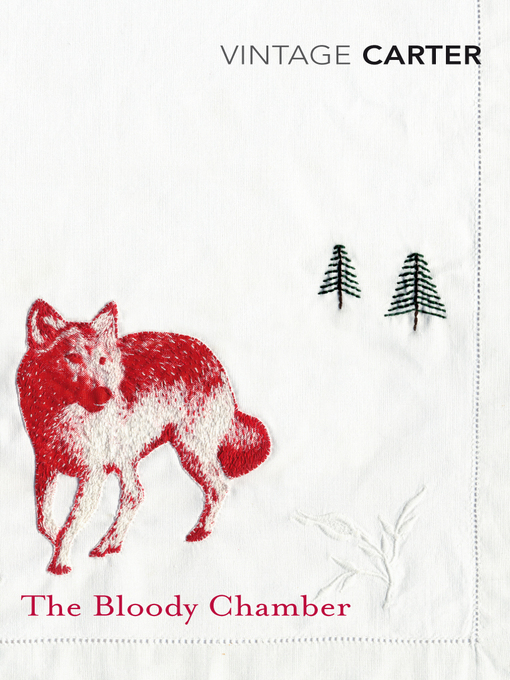
'The Bloody Chamber', Angela Carter, Vintage 2007

‘The Bloody Chamber’, Angela Carter, Vintage 2007, Artist’s own copy

Angela Carter’s book ‘The Bloody Chamber’, 1979 presents a wonderful version of ‘Little Red Riding Hood’ in the form of the short story ‘The Company of Wolves’, considering the ‘sexual awakening’ concept.  Neil Jordan’s somewhat dated but nevertheless beautifully filmed and at times epically scored adaptation, bearing the same name as Carter’s story, ‘The Company of Wolves’, 1984, Palace Productions, realises luscious archetypal Fairy Tale imagery.

'The Company of Wolves' Neil Jordan, 1984, Special Edition DVD 2005

‘The Company of Wolves’ Neil Jordan, 1984, Special Edition DVD 2005, Artist’s own copy

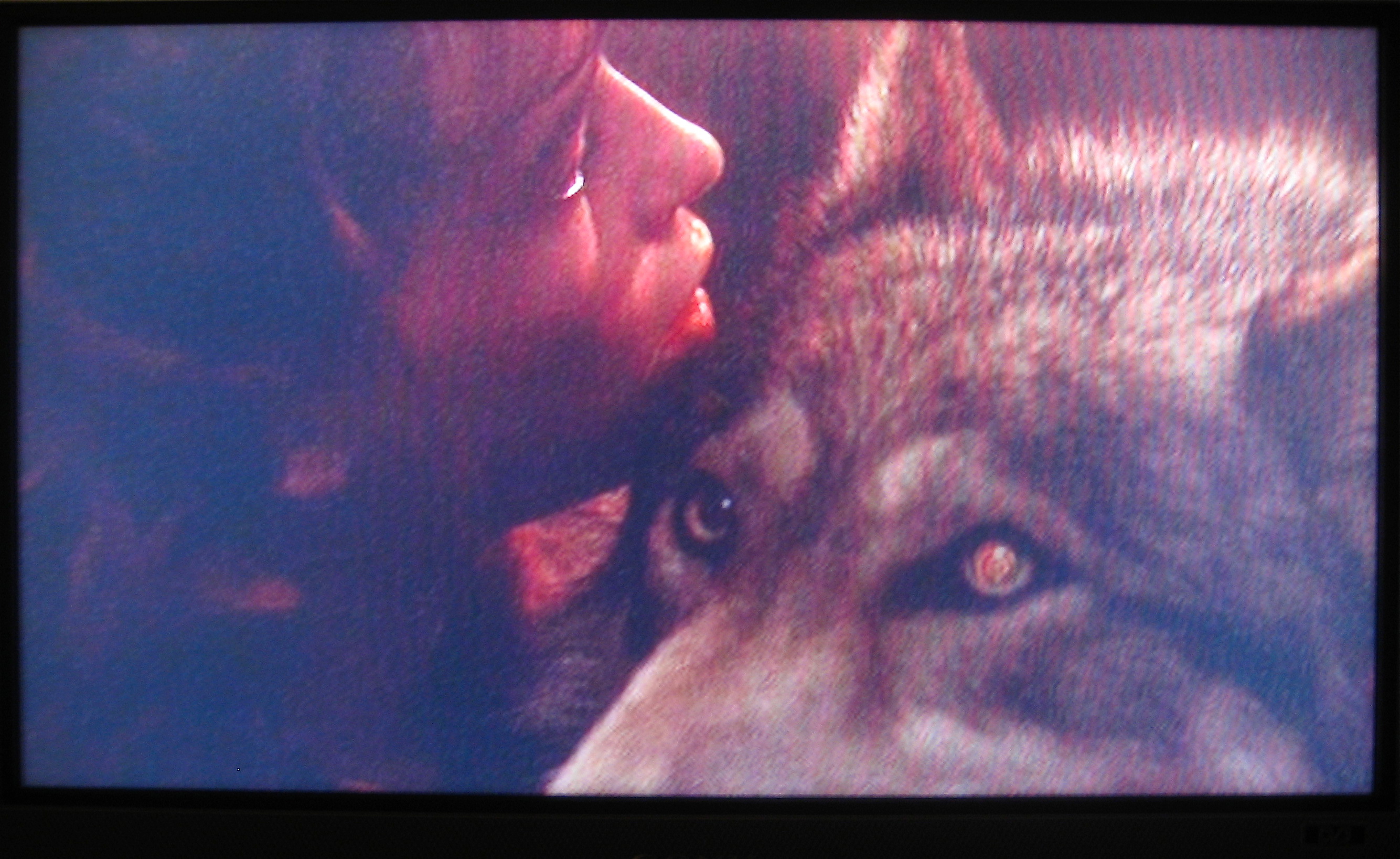
“See!  Sweet and sound she sleeps in granny’s bed, between the paws of the tender wolf.” ‘The Company of Wolves’, Angela Carter, 1979
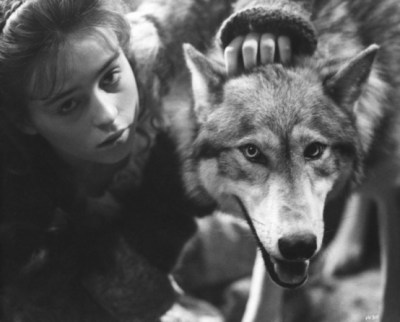
'The Company of Wolves', Neil Jordan, 1984

‘The Company of Wolves’, set photograph of Sarah Patterson and wolf, Neil Jordan, Palace Productions, 1984

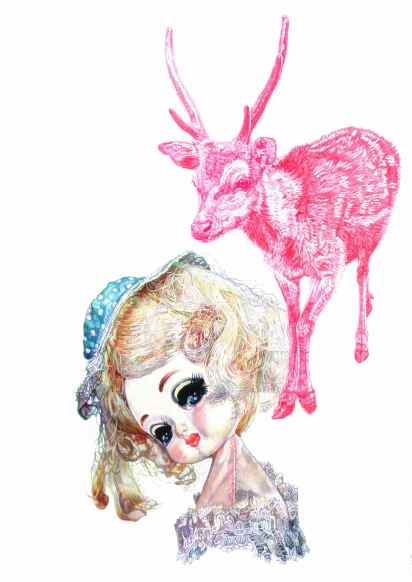
Inspired by the aforementioned research, I created the pattern for ‘Red Riding Hood’s Cloak’ in the form of two colour Biro drawings.  The first drawing ‘Doll and Pink Boris’, 2012 incorporated a vintage Bradley Doll, circa 1960s/1970s purchased from Retro, High Bridge, Newcastle and a semi-wild Sika deer my sister and I came across in the forests of Dumfries and Galloway in 2011 named Boris by the local foresters, who I photographed as he broke through the pine trees into a clearing.  The heavily painted face of the doll represents girls who are reaching sexual maturity experimenting with make-up and other facets associated with ‘growing-up’.  Boris epitomises the imagery of innocence, the gentleness of a young deer, ‘the quiet before the storm’ of sexual awakening, the loss of innocence but the gaining of experience.  His fluorescent colouring signifies the stereotyping of girls with the colour pink.  A recent movement has seen groups such as Pink Stinks.org.uk campaign against the stereotyping ‘Pinkification’ of girls, felt to have a detrimental affect on both girls and boys, limiting the development of young girls.

'Blue Boris', 2012, blue Biro drawing, study for 'The Woodcutter's Quilt'

‘Blue Boris’, 2012, blue Biro drawing by Jane Lee McCracken, study for ‘The Woodcutter’s Quilt’

In response to this campaign I must admit that one of the first toys I remember was a race-track with racing cars, a predecessor of ‘Scalextric, my father bought me for my second Christmas, which I loved.  I don’t remember many pink toys in my repertoire of play; I transcended to echelons of tube-train driver in London as an adult, an experience I am very grateful for.  The toys and books I had as a child, as well as influential people and experiences, gave me an appetite for a variety of different interests across the stereotypical gender spectrum allowing me to see things beyond gender specifics.  The questioning by such organisations of ‘Pinkification’, I affirmatively note whilst buying toys for children in my life, is perhaps a distinctly important issue in forging a more positive development for young girls nowadays.
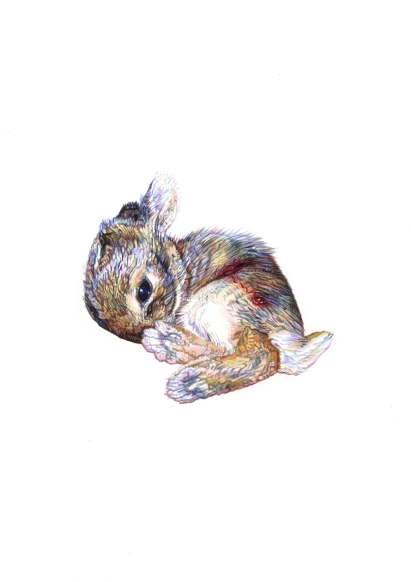
'Brown Bunny', 2012 colour Biro drawing by Jane Lee McCracken

‘Brown Bunny’, 2012 colour Biro drawing by Jane Lee McCracken, pattern design for cloak fabric

The second drawing ‘Brown Bunny’, 2012, depicts a  doe rabbit and is both a symbol of juvenility and reproduction . Rabbits reach sexual maturity between 3-8 months.  The tender age of the rabbit in the drawing highlights girls beginning puberty as early as 8 years of age, deeming such girls extremely vulnerable, where recent years have seen an upsurge in the UK of child and teenage pregnancies.  In the drawing the rabbit miscarries from a small wound on its side, denoting the vulnerability of all women to miscarriage.

'Red Riding Hood's Cloak, 2012, by Jane Lee McCracken detail of cloak pattern

‘Red Riding Hood’s Cloak, 2012, by Jane Lee McCracken detail of cloak pattern

Once made, the drawings were then scanned, printed on to transfer paper and cut out individually by hand, ironed onto calico, creating a unique fabric, then the fabric was cut out and sewn together to form the cloak.  The use of calico as the cloak fabric symbolises the emergence of a design in the making – calico prototypes are created in the fashion industry before a final garment is made.  They are raw and experimental just like young adults as they emerge from adolescence.  The hem of the cloak is left raw and frayed.
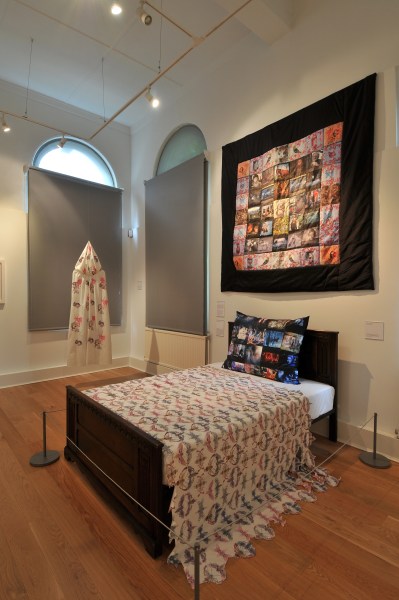
'Red Riding Hood's Cloak', The Mercer Art Gallery, 2013 next to my Grandmother's bed and 'The Woodcutter's Quilt'

‘Red Riding Hood’s Cloak’, The Mercer Art Gallery, 2013 next to my Grandmother’s bed with ‘The British Moth Throw’ and ‘The Woodcutter’s Quilt’

The vision for the cloak thereafter was to be hung from the ceiling of the gallery on a simple white wooden coat-hanger with the hood raised next to the installation of my own Grandmother’s Jacobean bed, circa 1940.  In both galleries the cloak drifted of its own violition in a ghostly, gently animated fashion, due to transient air flowing through the galleries.

'Red Riding Hood's Cloak' next to 'The Wolf's House', 2012, by Jane Lee McCracken

‘Red Riding Hood’s Cloak’ next to ‘The Wolf’s House’, 2012, by Jane Lee McCracken

Finally the erect hood not only alludes to the obvious symbolism of male sexuality within the tale of ‘Little Red Riding Hood’ but also denotes a suggestion of menace.  Reminiscent of the white cloaks worn during the religious wars and crusades’ of the middle ages, this brings us back full circle to what Freud wrote about man – “our innate tendencies… towards aggression, destruction and cruelty”.  One could argue further that, much of the aggression perpetuated by humankind in the form of war and destruction, has been led by the male of our species.  Females are mostly inclined to be far less aggressive than males.  Are we therefore back to Jung’s “Collective Unconscious” as to an explanation for human aggression, is it part of the unconscious?  Primo Levi said in his answer to the question posed by members of his readership ‘How can the Nazis’ fanatical hatred of the Jews be explained?’ in the afterword of ‘This is a Man and The Truce’“Perhaps one cannot (understand), what is more one must not understand what happened, because to understand is almost to justify”. Surely, in the same light as Premo Levi’s advocation that there are no excuses for what happened, the ‘Collective Unconscious’, does not excuse the damage we cause one another or our environment due to the vast knowledge we have gathered at this stage in our species development?  Our ability to understand this destruction and the fact that we are able as a species to change our engraved behavioural patterns if we want to should advise the prohibition of our worst behaviour.  But perhaps that’s the conundrum with humans, ‘if we want to?’

Artist's own film still 'The Company of Wolves', 2007

Artist’s own film still ‘The Company of Wolves’, 2007

“Meaning makes a great many things endurable – perhaps everything. No science will ever replace myth, and myth cannot be made out of any science. For it is not that “God” is a myth, but that myth is the revelation of a divine life in man.” Jung

'Doll and Pink Boris', 2011, colour Biro drawing by Jane Lee McCracken, part of design for 'Red Riding Hood's Cloak' fabric pattern

‘Doll and Pink Boris’, signed and numbered Archival Pigment Print

Luxurious Archival Pigment Prints on Hahnemühle Photo Rag 308gsm from the original Biro drawing of ‘Doll and Pink Boris’ are especially crafted to order by one of the best printmaker’s in the UK Jack Lowe Studio and available from my website shop

'Brown Bunny', 2012 colour Biro drawing by Jane Lee McCracken

‘Brown Bunny’, signed and numbered Archival Pigment Print

Luxurious Archival Pigment Prints on Hahnemühle Photo Rag 308gsm from the original Biro drawing of ‘Brown Bunny’ are especially crafted to order by one of the best printmaker’s in the UK Jack Lowe Studio and available from my website shop
Pets Home Alone during War and Disaster – New Art PRINT

'Lily', 2009, original black Biro drawing by Jane Lee McCracken

‘Lily’, 2009, original black Biro drawing by Jane Lee McCracken

During war and disaster pets are often left behind to fend for themselves.  Fleeting opportunity in which to escape leaves little time to garner pets whom instinctively may bolt from fear.   Panic-stricken people often seize personal possessions and furniture instead of animals – although sometimes the heart strings just aren’t long enough.  For those who adore their pets it’s hard to imagine the pain experienced during such times when an owner is not able to locate a beloved animal, left only with the angst and speculation of what happened to them.

My drawing entitled ‘Lily’ represents pets that are left behind during war and disaster; the dog’s owner took the furniture instead.

'"A girl holding her dog in a devastated neighborhood in Warsaw, Poland, 5 Sep 1939" by Julien Bryan'

‘”A girl holding her dog in a devastated neighborhood in Warsaw, Poland, 5 Sep 1939″ by Julien Bryan’

Some pets are kept close during flight or rescued in the aftermath of the event – their moving stories recounted or their images captured on film or in photographs.  During WWII, the little girl standing in shock amongst the devastation of Warsaw in 1939 holds her dog close, comforted by his presence.  The determination and strength worn on the face of a French woman leading her horse whilst her dogs follow under cover of a cart full of possessions.

19 July 1940, Refugees escaping France WWII

19 July 1940, Refugees escaping France WWII

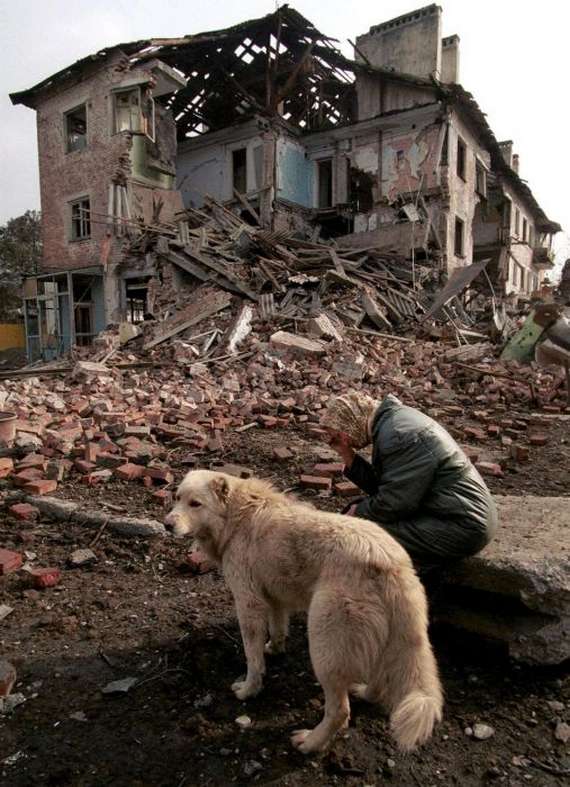
Woman and her Dog outside her bombed house, Grozny, Chechnya 1995. Photograph by Yuri Gripas

Woman and her Dog outside her bombed house, Grozny, Chechnya 1995. Photograph by Yuri Gripas

In 1995 Grozny, Chechnya, with her dog next to her a woman despairs at the bombing of her home whilst an evacuee in a truck says goodbye to his dog.

Russian man, Grozny, Chechnya says goodbye to his dog, 1995. Chechen forces. (AP Photo)

Russian man, Grozny, Chechnya says goodbye to his dog, 1995. Chechen forces. (AP Photo)

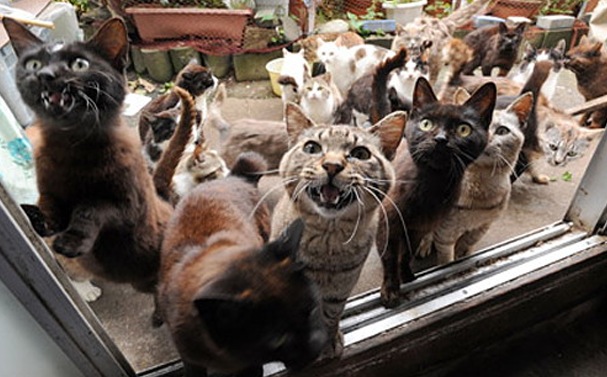
Cat Survivors of the 2011 Tsunami, Tashirojima (Cat Island), Japan

Cat Survivors of the 2011 Tsunami, Tashirojima (Cat Island), Japan

Around the world concern was raised for the feline occupants of Tashirojima or ‘Cat Island’, Japan during the 2011 Tsunami.  But many of the cats survived, cared for by people of the small community of 100 islanders, still outnumbered by their feline friends.  In 2013 a dog survived 3 days buried under rubble following an earthquake in Lalu Village in Hetuo Township Dingxi, China and was eventually recovered by villagers and rescue teams.

Dog rescued after 3 days buried under rubble after earthquake Lalu Village in Hetuo Township, Dingxi, China 2013

Dog rescued after 3 days buried under rubble after earthquake, Dingxi, China 2013

The dog in the drawing is my own dog, Lily.  She lies on the memory of a chair representing owners who took furniture and personal belongings instead of their pet leaving the family dog to fend for itself amongst the wreckage of war and disaster.

DNA of Northern Inuits and other Malamute breeds is closer to Gray Wolf DNA than many other dog breeds.  Dogs who give many of us unequivocal companionship were domesticated from wolves thousands of years ago.

In light of this all profits from each print sold will be donated to ‘The Wolves and Humans Foundation’.

The Wolves and Humans Foundation is a UK based charity dedicated to the conservation of Europe’s large carnivores wolves, bears and lynx. Wolves and Humans work with people and local communities to find practical solutions to co-existence with wolves and other large carnivores, thereby helping long-term conservation of these species. For further information please visit http://www.wolvesandhumans.org/index.htm

'Lily', 2009, original black Biro drawing by Jane Lee McCracken

‘Lily’, 2012/2014 Archival Limited and Open Edition Pigment Print Series’, Jane Lee McCracken

Archival Pigment Prints are available in two sizes –

NEW A4 Print – signed and numbered luxurious Archival Pigment Prints on Hahnemühle Photo Rag 308gsm of ‘Lily’ are especially crafted to order by one of the best printmaker’s in the UK Jack Lowe Studio and are available to purchase for £35 inclusive P&P from my website shop
A3 Limited Edition of 200 – signed and numbered luxurious Archival Pigment Prints on Hahnemühle Photo Rag 308gsm of ‘Lily’ crafted by one of the best printmaker’s in the UK Jack Lowe Studio and are available to purchase for £55 inclusive P&P from my website shop
A Year in Pictures – Art Muse LILY takes Life in her Stride

Lily, star of many drawings by artist Jane Lee McCracken reveals a year in her life as an art muse, what she will be eating for dinner this Christmas and her special Christmas wish.

LILY CALENDAR DECEMBERLILY CALENDAR

IMG_0089January – “I love snow! I like to run at it with my mouth open like a snow plough so I can eat as much of it as I can in one go.”

IMG_4595February – “This is one of my favourite drawings where I got a big starring role as the white wolf. I liked modelling this cool i-pad cover too!”

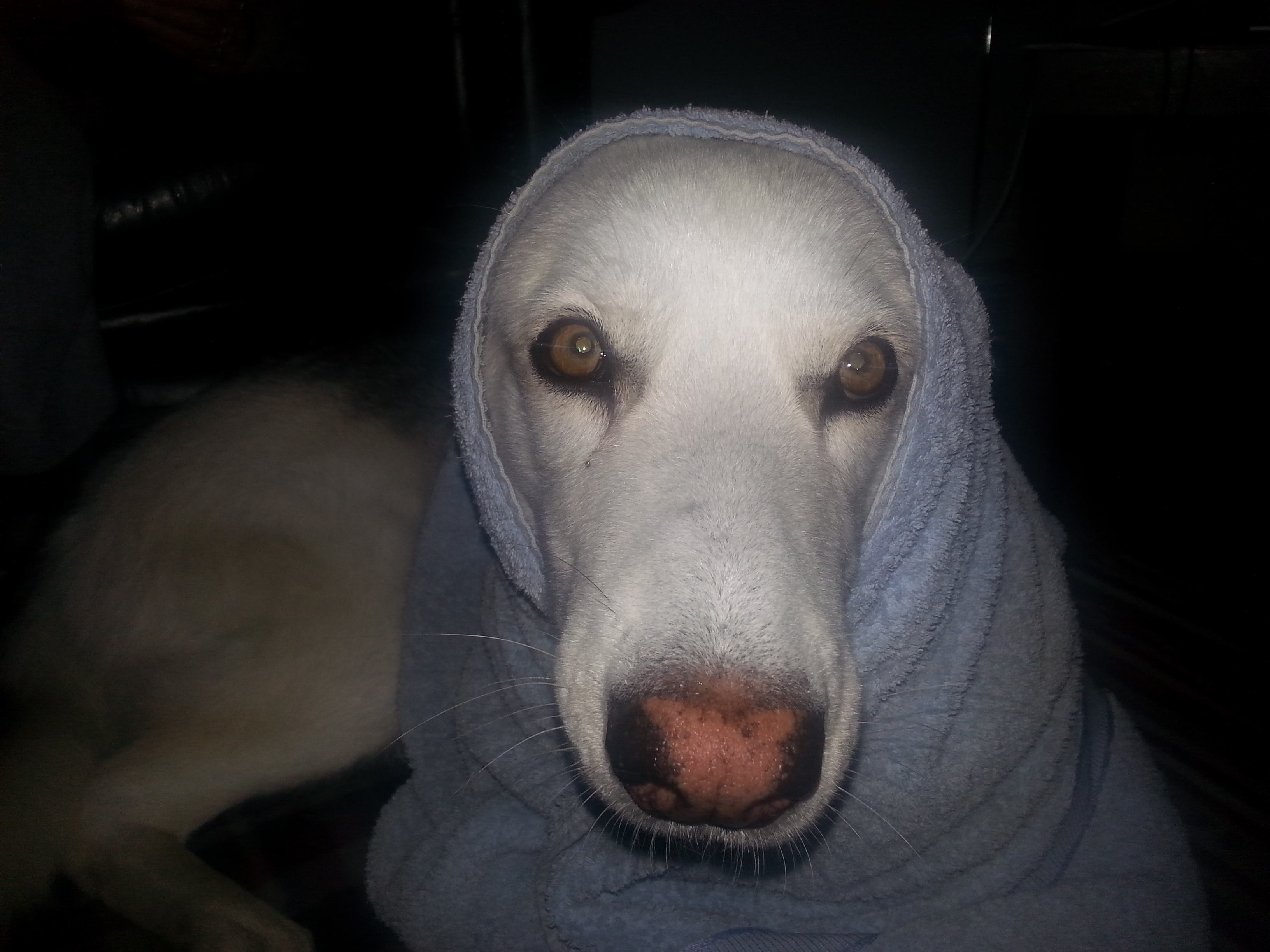
20130906_215602 (1)March –  “Early rehearsals began for this year’s nativity! (I put my ears back when I’m happy so could wear Mary’s headscarf with ease)”

IMG_0474April –  “I have to do a lot of sitting around during modelling shoots.  I just go to sleep and boom wake up for the camera”

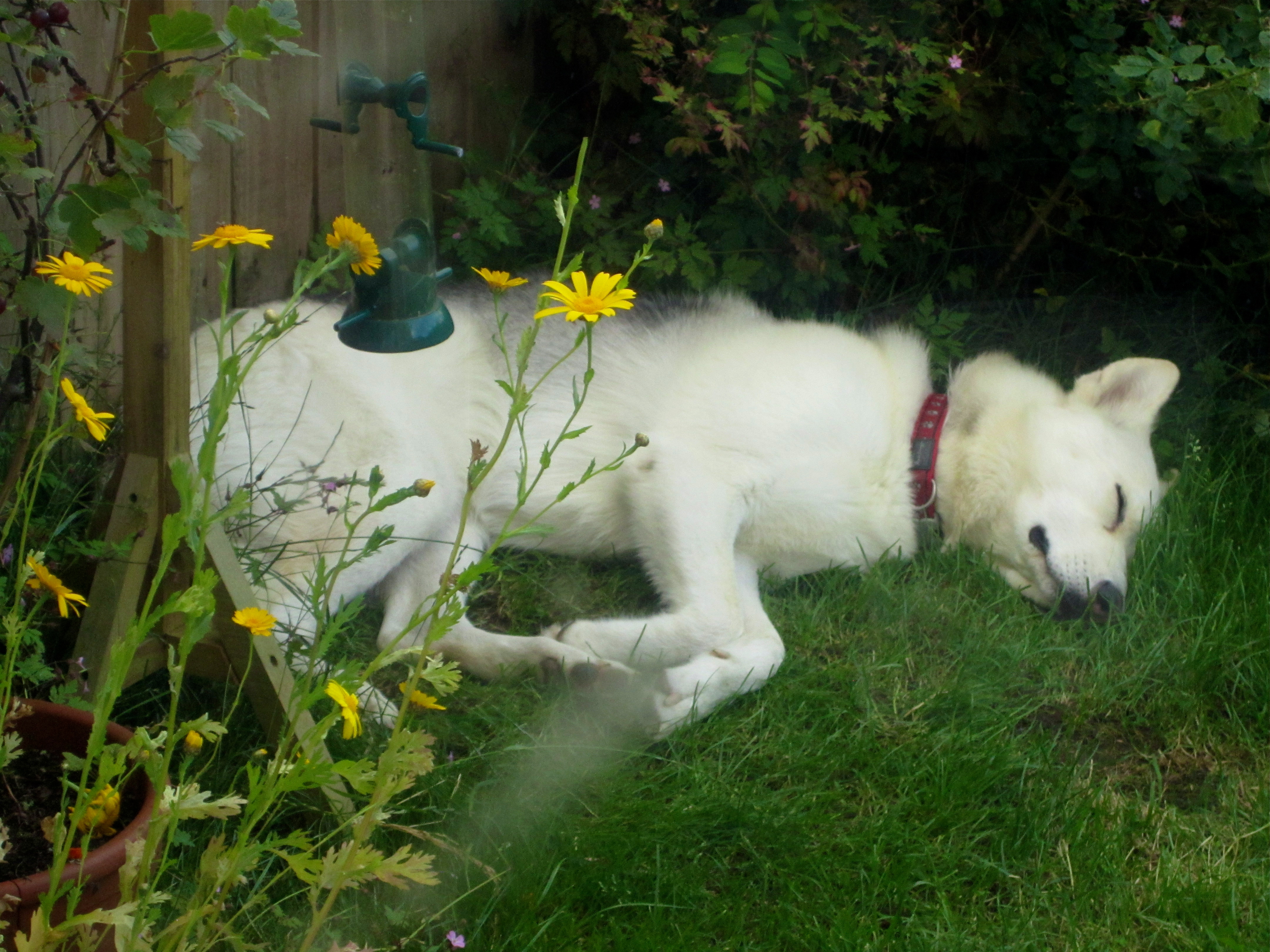
IMG_8913May –  “In my recreational time I love to lie in the garden amongst the flowers and sleep.  I often dream about rabbits and barking at other dogs”

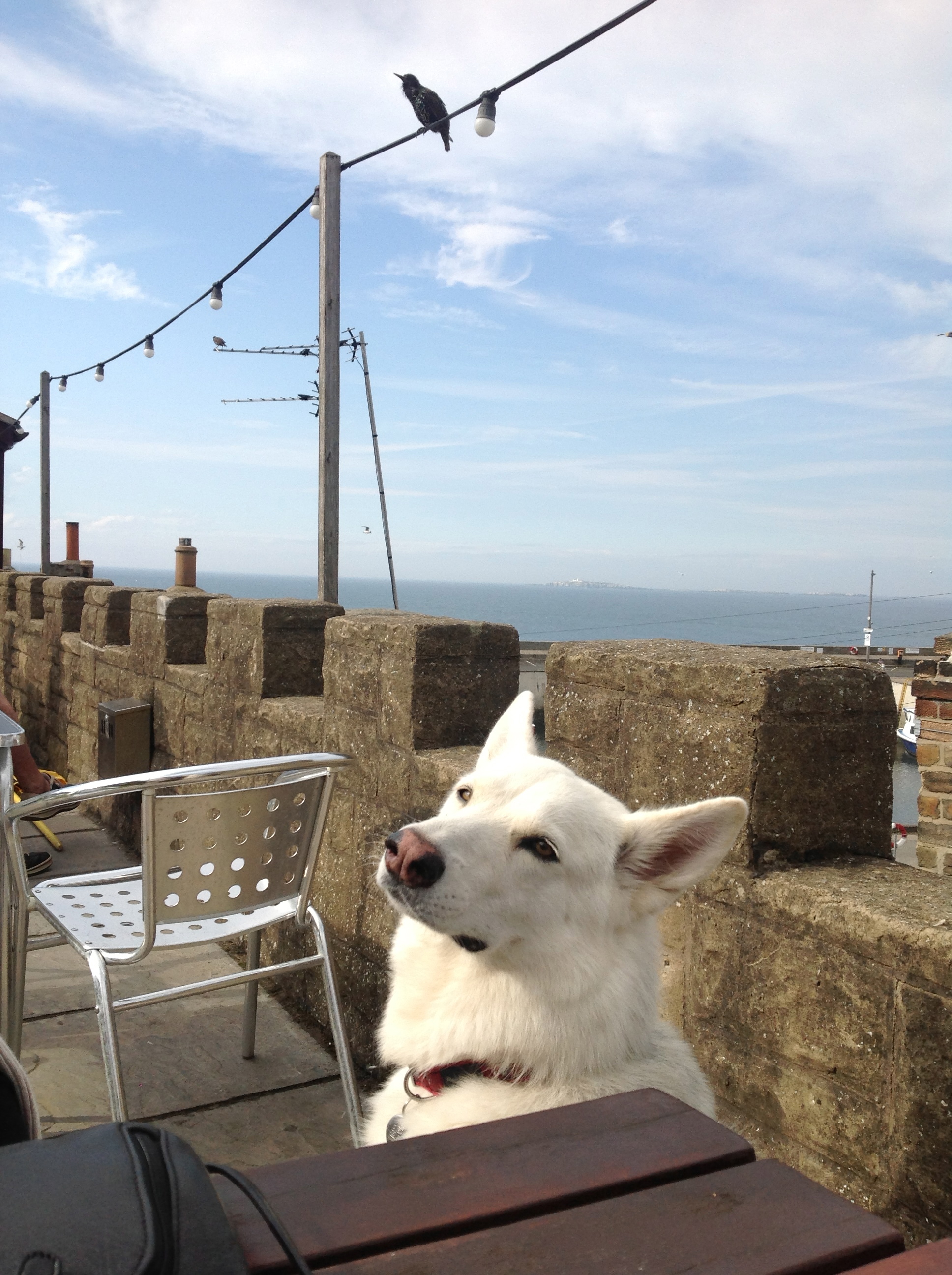
IMG_1098June –  “I love to go to the pub, particularly the beer garden of the Olde Ship in Seahouses, Northumberland”

IMG_1231July –  “This year I was centre stage in an exhibition at The Mercer Art Gallery, Harrogate, England and went down to trip the light fantastic and meet the people of Harrogate who were very nice”

IMG_7296August-  “Summer brings clover and I love to lie in it and pretend to catch bees!”

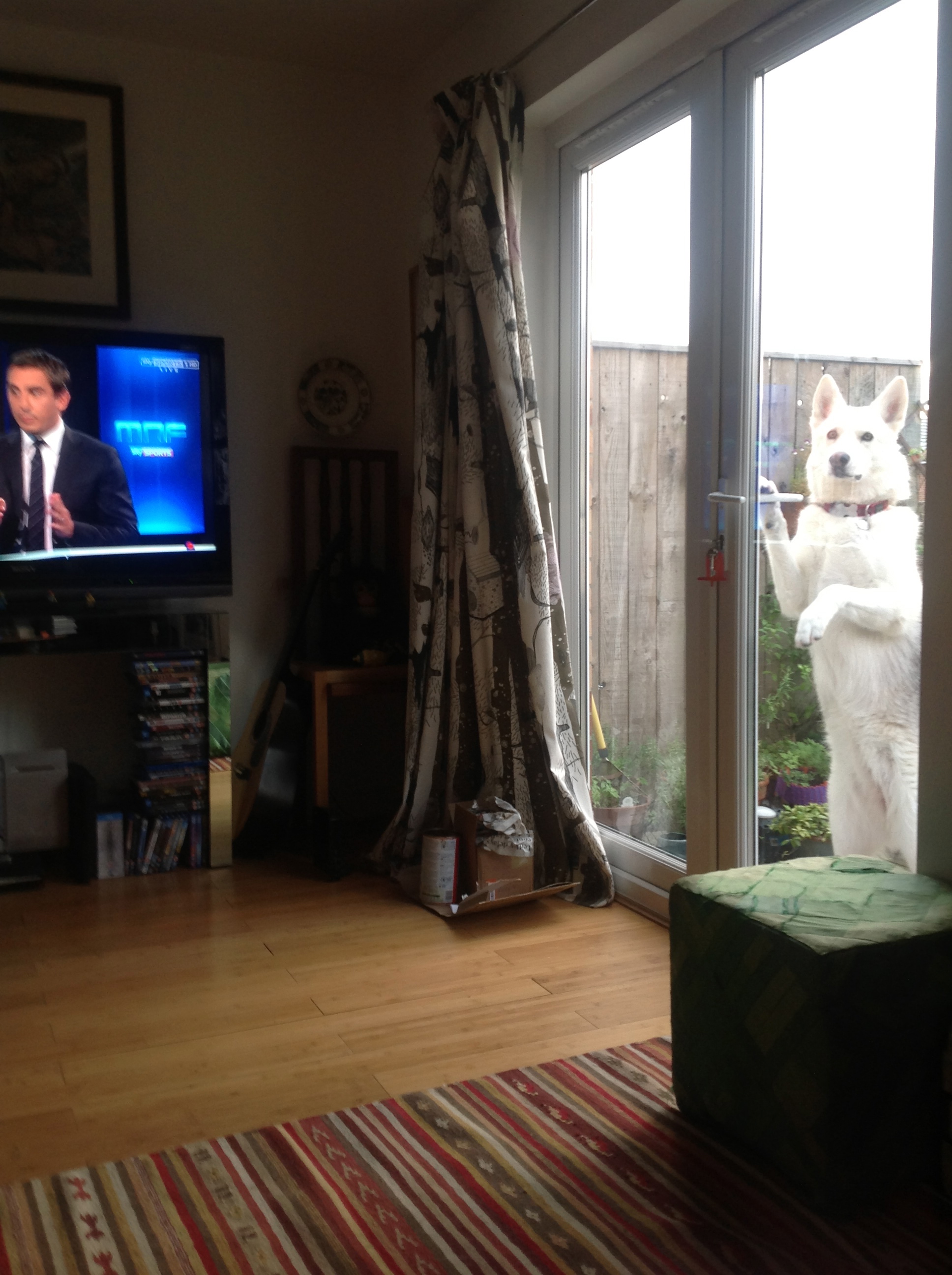
IMG_1264September-  “This is the year that I learnt to open the back door and let myself in and then I wanted to let myself out again as the football was on!”

IMG_4665October –  “Cuddling my playmate is a very important part of my daily routine and now the mornings are dark I find it increasingly difficult to get out of bed for walks, I’d rather just have hugs”

IMG_4413November –  “Atka’s my pin-up boy, I’d love to meet him one day!”

LILY CALENDAR DECEMBERDecember –  “My friend Joe Bason made me this Christmas bow-tie, isn’ it gorgeous?! I love wearing it when I go to the shops with my owner, it goes with my Red Dingo collar! (Thank you also to my friend Juliet of KimonoKraft Love you Long Time http://www.etsy.com/uk/shop/KimonoKraft for being the inspiration behind my calendar!)

So Lily what will you be eating for Christmas this year? –

“I just can’t resist it, I’ll be having a bowl of my favourite food, Chappie and then a whole Dentastick after my owners have eaten their Christmas dinner.  But probably when they’re not looking my Granny and Auntie Karen will sneak me roast potatoes and maybe some Haribo Starmix as I love them!”

Have you got any special Christmas wishes? – “My owners bought me from a breeder who didn’t tell them that Northern Inuits can never be left on their own, plus they didn’t do enough research about my breed before they bought me.  I’m lucky, they love me very much, but it’s hard work making sure that I’m cared for 24 hours a day.  I get very distressed if I’m left on my own.  If you can’t give proper care to specialist breeds like me give a rescue dog who’s not a Diva a loving home instead.”

LILY CALENDAR HOWLING 2

Sponsored by http://www.dogonthepitch.co.uk/

Dogonthepitch wordpress